Why night splints for plantar fasciitis? What they actually do
When plantar fasciitis flares, the first painful step in the morning is often what drives people to try a night splint. The idea is simple: keep the foot in a gentle dorsiflexed position overnight so the plantar fascia and calf do not shorten while you sleep. That maintained stretch can reduce the microtears and morning pain associated with the typical “first-step” symptom.
Clinical studies and systematic reviews show that night splints can reduce pain and improve function for many people, particularly over the short term (weeks to a few months). But not all splints are created equal, and the one that helps your neighbour might not be the one you can tolerate. My goal here is to walk you through the common over-the-counter options, how they differ in design and mechanism, and practical tips to improve comfort and adherence so the splint can actually help recovery.
The main types of over-the-counter night splints
At a high level you’ll find three common styles sold OTC:
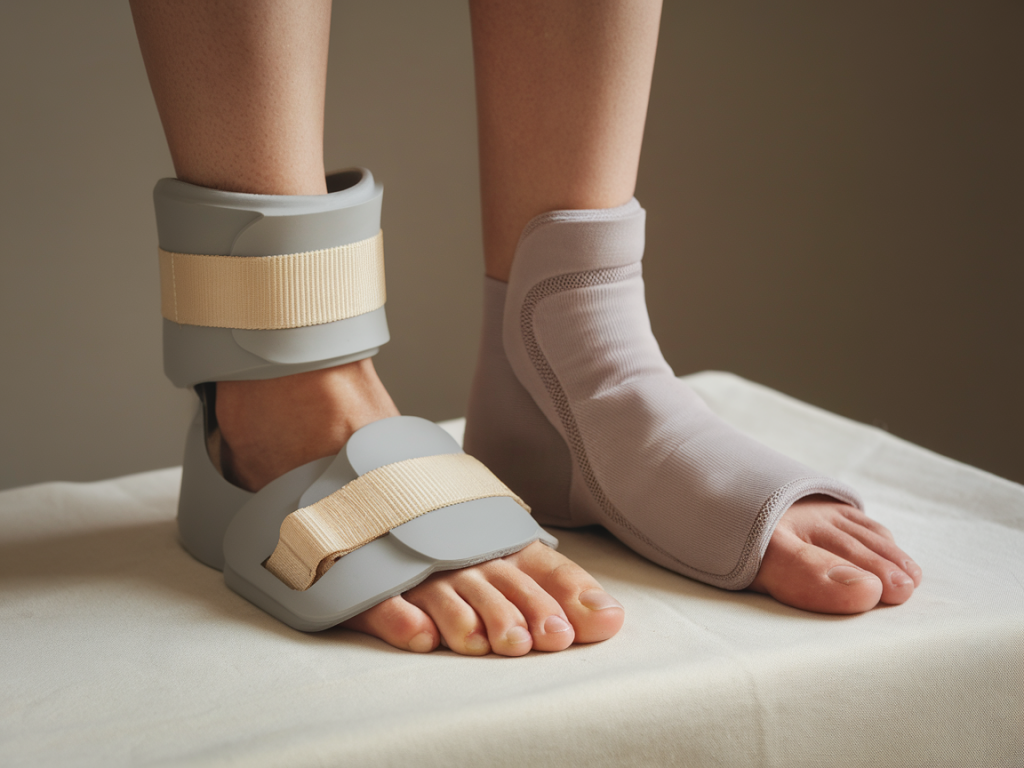
- Dorsal night splints – these sit on the top of the foot and shin, with straps pulling the foot into dorsiflexion. They tend to be less bulky and easier to sleep with for some people.
- Posterior (boot-style) night splints – these cradle the back of the calf and heel and hold the ankle at a set angle. They can feel more secure but are bulkier.
- Strassburg sock / fabric strap systems – socks with a strap that pulls the toes toward the shin. Lightweight and flexible, but less consistent stretch than a rigid splint.
Side-by-side comparison: common OTC splints
| Product | Type | Pros | Cons | Tolerance/comfort notes | Typical wear time |
|---|---|---|---|---|---|
| Aircast Dorsal Night Splint | Dorsal | Less bulky, adjustable straps, durable | Can put pressure on the top of foot; less rigid toe control | Good for side-sleepers; pad straps to avoid hotspots | 6–8 hours overnight |
| Bauerfeind Night Splint / generic posterior boot | Posterior (boot) | Stable, consistent angle, good for severe cases | Bulky, hot, harder to sleep in; more visible | Better for people who need fixed angle; try with pillow between legs | 6–8 hours, or as tolerated |
| Strassburg Sock (or knock-off fabric version) | Fabric strap sock | Lightweight, inexpensive, easy to wear | Less consistent stretch overnight; strap can loosen | Best for tolerance trials; easiest to ease into wear | Start with 2–3 hours, work toward overnight |
| Plantar Fasciitis Splint by Futuro / ProCare dorsal | Dorsal | Comfort-focused padding, lower profile | May not provide enough dorsiflexion in severe cases | User-friendly; good first-line OTC choice | 4–8 hours |
Which actually speeds recovery?
“Speeds recovery” depends on two things: the biological effect (keeping tissues stretched) and your ability to wear the splint long enough for that effect to happen. A perfectly effective splint that you can’t tolerate does nothing. Evidence indicates rigid splints that maintain dorsiflexion through the night provide the most consistent mechanical benefit. In practice:
- If you can tolerate a posterior boot, it will reliably keep the ankle at a therapeutic angle — this can speed symptom reduction for people with moderate to severe plantar fascia tightness.
- If you cannot tolerate the bulk, a well-fitted dorsal splint (Aircast-style or Futuro) often gives similar pain reduction for mild–moderate cases with better tolerance.
- The Strassburg sock is helpful if you can’t sleep with a brace at all; it’s better than nothing and is useful to build adherence gradually.
How to choose based on your goals and tolerance
Ask yourself:
- Do I need a firm, fixed angle because pain is severe? Consider a posterior boot.
- Do I prioritize sleeping comfort and want something lower-profile? Try a dorsal splint.
- Do I have fragile skin, circulation issues, or neuropathy? Avoid rigid OTC splints without clinician oversight — see a clinician first.
Practical tip: buy from a retailer with a reasonable return policy. Fit varies between brands and between feet, and you may need to exchange sizes or models.
At-home tolerance plan: how to get used to a night splint
Adherence is the single most important factor. Here’s a stepwise plan I recommend when you first try a splint:
- Night 1–3: wear for 30–60 minutes while awake (watch TV or read). Check for pressure points, redness, or numbness.
- Night 4–7: increase to 2–3 hours before sleep. Apply extra padding (moleskin) where straps rub.
- Week 2: attempt a full night's wear. If you wake with pins-and-needles, reduce time and review fit adjustments.
- Use breathable socks and loose pajamas; keep a cold pack available to ease skin irritation if needed.
- Combine with daily calf stretches, eccentric calf strengthening, and plantar fascia massage — splints are most effective as part of a rehab program, not in isolation.
Fitting, skin care, and safety
Good fit matters. The splint should feel secure but not painfully tight. Watch for:
- Skin blanching or persistent redness — adjust or add padding.
- Numbness or tingling — this suggests compression of nerves or circulation; remove and reassess immediately.
- New or worsening swelling — get professional advice.
If you have diabetes, severe peripheral neuropathy, or vascular disease, avoid OTC rigid splints without clinician oversight — skin breakdown can occur before you notice it.
Combining splints with other things that actually help
A night splint speeds recovery best when paired with simple daily habits:
- Daily calf stretches (gastrocnemius and soleus) — hold each for 30–45 seconds, 3 times per leg, twice a day.
- Plantar fascia-specific massage/rolling with a ball or frozen water bottle for 3–5 minutes daily.
- Gradual loading: walk and stand in supportive shoes and avoid sudden increases in activity.
- Footwear: use shoes with good arch support and a slightly cushioned heel for the first few weeks of recovery.
What to expect timeline-wise
Many people notice reduced morning pain within 2–6 weeks if they wear the splint consistently and address other factors (stretching, footwear, load management). For stubborn or chronic cases (>6 months), a night splint can still reduce symptoms but may need to be combined with a physiotherapy-led program or further interventions.
If you try a splint and pain worsens or you develop sensory changes, stop and consult a clinician. Otherwise, patience and consistent wear — even in small increments if that’s all you can tolerate — are what deliver results.