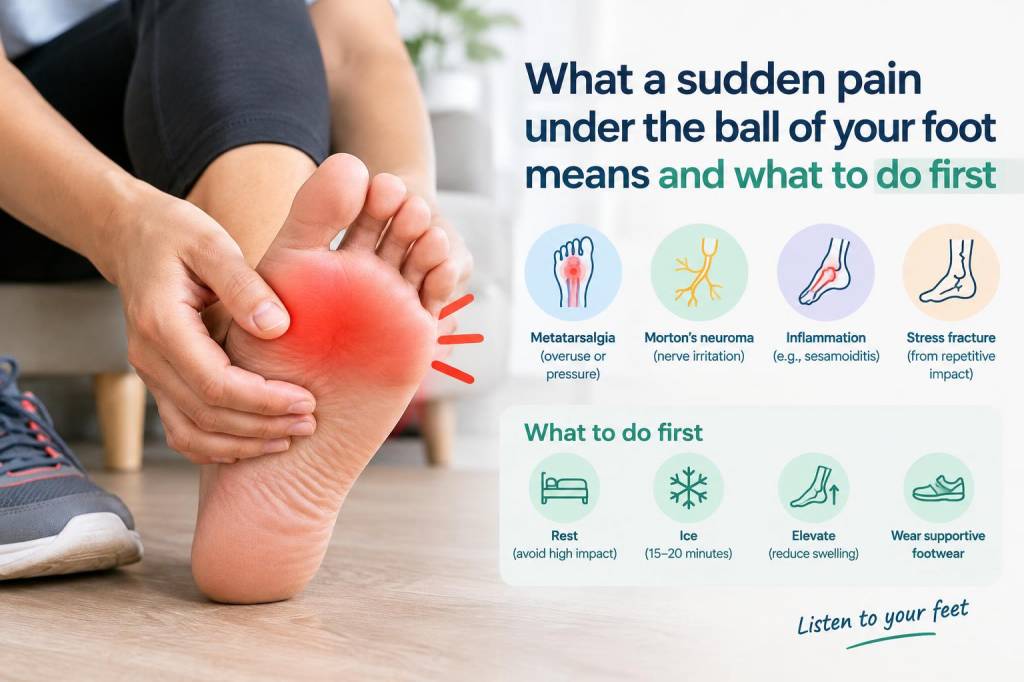
A sudden pain under the ball of the foot can feel alarming, especially when it appears out of nowhere during a walk, a workout, or even while standing still in the kitchen. I know that moment well: one step feels normal, and the next one sends a sharp reminder through the forefoot. When that happens, I like to slow everything down and treat the symptom as useful information rather than panic. The location of the pain, the way it feels, and what was happening right before it started can reveal a lot about what may be going on.
The ball of the foot carries a large share of body weight with every step, so even small changes in load, footwear, stride, or tissue stress can create pain quickly. Sometimes the issue is minor and settles with a little rest. Other times it is a sign that the tissues under the metatarsal heads, the toe joints, or the surrounding nerves need more careful attention. I always think in terms of first response: protect the area, reduce irritation, and notice any warning signs that suggest you should seek medical care sooner rather than later.
What sudden forefoot pain can point to
When pain appears under the ball of the foot, several possibilities come to mind. I do not assume every sharp pain is serious, but I also do not dismiss it. One common possibility is simple overload. A long day on hard floors, a fast increase in walking, a run in shoes with poor support, or a lot of barefoot time on unforgiving surfaces can irritate the metatarsal region. In that case, the discomfort often feels like a bruise, a burning ache, or a hot spot that gets worse with pressure.
Another possibility is irritation around the metatarsophalangeal joints, which are the joints where the toes meet the foot. If those joints become stressed, bent, or inflamed, pain can show up directly under the ball of the foot. I also think about a possible plantar plate strain, especially if the pain is centered below one toe and feels worse during push-off. A Morton’s neuroma is another cause I keep in mind, particularly if the pain feels sharp, electric, burning, or accompanied by tingling between the toes.
Stress reactions or stress fractures can also begin with sudden forefoot pain, especially if there has been a big jump in activity, a new exercise routine, or a change in shoes. At first, the pain may only appear during activity, but it can become more constant if the area keeps getting loaded. Sesamoid irritation is another common source, especially beneath the big toe joint. In my experience, pain under the first metatarsal head often deserves extra care because people keep walking on it longer than they should.
What I do first when the pain starts
My first move is simple: I stop whatever is aggravating it. I do not try to push through sharp forefoot pain just to finish a workout or get through a busy day. I reduce load right away. That may mean taking off shoes, sitting down, switching to softer footwear, or limiting walking for the rest of the day. If the pain appeared during exercise, I end the session instead of “testing” it repeatedly.
Then I look at the foot itself. I check for swelling, redness, bruising, warmth, or a visible change in toe position. I pay attention to whether I can put weight through the foot at all, whether the pain is pinpointed to one spot, and whether it is worse when I press on a specific bone. If the pain is very localized and tender to touch, I become more cautious. If it spreads, tingles, or feels numb, I think about nerve irritation.
I also use a simple comfort strategy: relative rest, elevation if the area feels swollen, and footwear that reduces pressure under the forefoot. A shoe with a wider toe box and a more forgiving sole can make a surprising difference. If I have access to a stiff-soled shoe, that can help limit bending at the painful spot. A temporary metatarsal pad may also help, but I place it carefully because poor placement can make symptoms worse rather than better.
What I avoid in the first twenty-four to forty-eight hours
When the pain is fresh, I avoid anything that increases compression under the ball of the foot. That means no jumping, sprinting, hill repeats, long walks for exercise, or aggressive calf stretching if it increases forefoot pressure. I also avoid thin, unsupportive sandals and worn-out shoes that collapse under the forefoot. Barefoot time on hard floors can be irritating when the tissues are already sensitized, so I usually keep protective footwear on indoors if symptoms are active.
I also avoid repeated self-testing. It is tempting to keep pressing on the sore spot or walk “just to see” whether it has improved, but that often adds more irritation. I prefer to let the foot settle and then reassess later with a calmer, more objective check. If the pain is clearly getting worse rather than better, I take that seriously.
Signs that make me more concerned
Not every pain under the ball of the foot is an emergency, but some signs deserve faster evaluation. If I cannot bear weight for more than a few steps, I want that assessed. If there is significant swelling, a visible deformity, bruising after a twist or impact, or pain that is severe enough to change my gait dramatically, I consider that a red flag. Fever, redness that spreads, or pain with an open wound can point to infection and should not be ignored.
I am also cautious if the pain wakes me at night, if there is numbness or persistent tingling, or if the symptoms linger without any improvement after a period of reduced activity. Pain that keeps returning in the same place with each attempt to resume normal movement may indicate an underlying mechanical problem that needs a more detailed evaluation. In those cases, I would rather get an assessment early than wait for the problem to become harder to treat.
| Possible pattern | What I notice | What I do first |
| Overload irritation | Aching or bruised feeling after long standing or walking | Reduce load, change shoes, rest from impact |
| Nerve irritation | Burning, tingling, sharp electric pain between toes | Ease pressure, avoid narrow shoes, monitor symptoms |
| Joint or tissue strain | Pain at push-off, soreness under one toe joint | Limit forefoot bending, protect the area, reassess |
| Possible fracture or stress reaction | Pinpoint tenderness, swelling, worsening with weight-bearing | Stop impact activity and seek medical evaluation |
Footwear changes that matter more than people expect
I have seen many forefoot flare-ups improve simply because the shoe situation changed. A narrow toe box can squeeze the forefoot and increase pressure under the metatarsal heads. A shoe with a thin, flexible sole may let the foot bend too much in the wrong place. High heels shift body weight forward and can make the ball of the foot absorb more load than it should. Even a shoe that once felt fine can become a problem if the midsole is worn down.
When the ball of the foot is painful, I usually look for a wider toe box, a stable heel counter, and enough cushioning to reduce sharp ground contact. I like shoes that feel calm under the foot rather than “alive” with every step. If I need more support, I sometimes use an insert that redistributes pressure, but I am careful not to add devices too quickly without paying attention to fit. A small adjustment in pressure can change symptoms more than people expect.
What I watch in my own recovery
My recovery mindset is simple: I look for gradual improvement, not perfection overnight. I want pain to be less intense, less frequent, and less reactive to normal movement. I watch whether I can walk with a more natural stride, whether the foot tolerates short indoor activity, and whether the next morning feels better than the last. If symptoms improve, I reintroduce activity slowly and keep the rest of the body in the loop, including calf mobility, ankle strength, and hip control, because compensation elsewhere can keep the forefoot under stress.
I also pay attention to training changes. If I recently increased steps, added a new sport, switched to minimalist shoes, or spent more time on hard surfaces, I treat that as a clue rather than a coincidence. The body often gives a warning before it gives a lasting injury, and the ball of the foot is one of the places where that warning shows up clearly. I prefer to respond early, adjust the load, and make the foot feel safe again before building back up.
If I notice that pain returns each time I try to resume normal walking, if the sore area becomes more specific and tender, or if I begin to protect the foot automatically, I would not ignore that pattern. I would pause the activity that seems to trigger it, protect the area, and arrange a professional assessment if the symptoms do not settle. In my experience, forefoot pain is often manageable when addressed early, but it is much harder to sort out after weeks of repeated irritation.