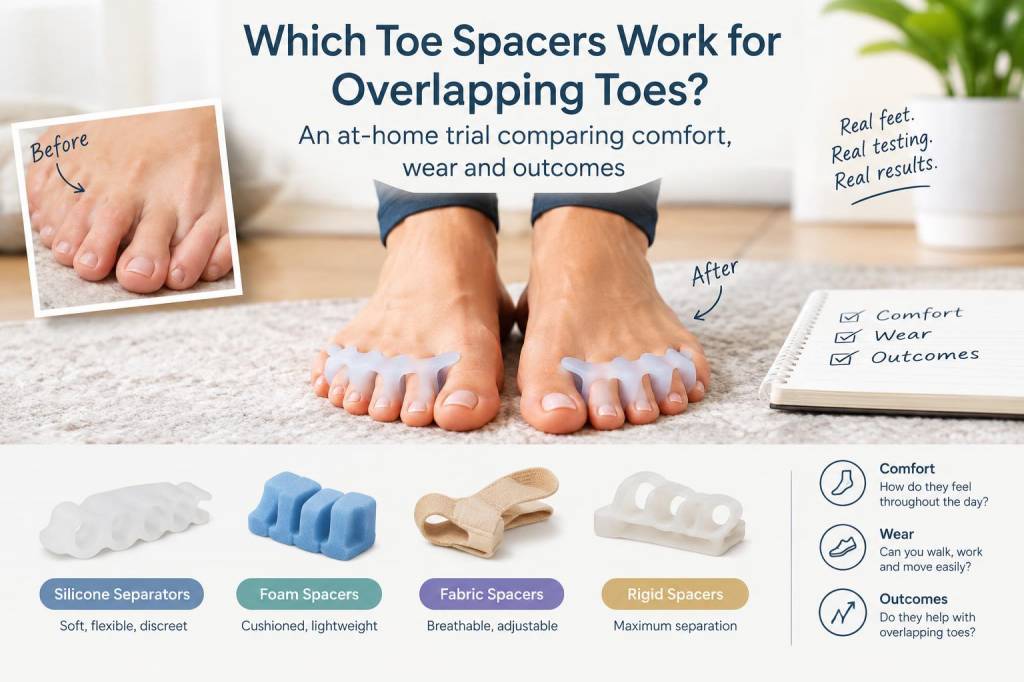
I recently ran a small at‑home trial to answer a question I get asked all the time: which toe spacers actually help with overlapping toes, and which ones are comfortable enough to wear regularly? Overlapping toes are common and can be driven by tight shoes, genetics, bunions, or simply the way we move. I wanted practical, real‑world impressions—how these devices feel, whether they stay in place, how long you can tolerate them, and whether they make a noticeable difference in alignment or pain.
What I tested and why
I picked five types of toe separators that are commonly recommended or easy to buy online. I wore each type for a week (daytime where possible, otherwise during low‑impact activities and at night) and noted comfort, durability, ability to reduce overlap, fit in shoes, and ease of cleaning. The products were:
Silicone toe spacer (generic, soft, ring‑style)Gel toe separators (YogaToes style, full‑foot pad)Silicone toe spacers with individual toe loops (similar to Correct Toes, off‑the‑shelf replica)Foam toe separators (disposable, lightweight)Toe socks with separators (ToeSox style, fabric between toes)I chose these because they represent the main categories people buy: soft rings or wedges, full under‑foot pads that spread toes gently, looped orthotic‑style spacers meant to actively realign, very inexpensive foam spacers, and fabric options for people who dislike silicone.
How I judged each spacer
My criteria were simple and practical:
Comfort — immediate feeling and how it felt after 30 minutes, 2 hours, and overnight.Stability — did it stay on the toes, slip, or roll?Shoe compatibility — could I wear normal shoes, wide trainers, or only open shoes?Longevity and hygiene — how it stood up to daily use and how easy it was to clean.Effect on overlap and symptoms — any reduction in rubbing, pain, or visible overlap.What I found
None of these are magic fixes, but some clearly outperform others depending on your goals.
Silicone ring‑style toe spacers
These are the small soft silicone rings that sit between the toes. They’re inexpensive and widely available.
Comfort: Immediately tolerable for short periods. After longer wear I felt mild pressure where the ring contacted the toe base on some days.Stability: Tended to slip with active walking or if my feet got slightly sweaty.Shoe compatibility: Often fine in wide, soft shoes but uncomfortable in narrow shoes or anything with a tight toe box.Effectiveness: Helps temporarily reduce friction and rubbing between overlapping toes, but doesn’t exert enough corrective force to realign toes long‑term.Gel toe separators / full‑foot pad (YogaToes style)
These are larger, softer gel devices that position the toes across a small pad. They’re commonly used for nightly toe spreading and foot mobility work.
Comfort: Very comfortable for short‑term stretching and night use. Some people love them for evening foot care.Stability: They stay in place when you’re seated or lying down but move if you walk; they’re not designed for daytime walking.Shoe compatibility: Practically none—these are for barefoot or socked use at home.Effectiveness: Good for gentle nightly toe spacing, can help reduce mild overlap over weeks when used consistently alongside mobility and strengthening exercises.Looped silicone spacers (orthotic style)
These mimic the Correct Toes design: a single piece of medical‑grade silicone with individual toe caps and sometimes a toe spacer bar. They’re meant to be worn in wide shoes and offer an active realignment.
Comfort: Takes an adjustment period. At first you feel the device between toes and at the bases; after several days it becomes much more tolerable.Stability: Excellent — the loops hold each toe, preventing slippage.Shoe compatibility: Works in shoes with a roomy toe box. Not compatible with most fashion shoes unless you size up or choose very wide toe boxes.Effectiveness: Best for gradual realignment. With consistent use (several hours daily in appropriate shoes) I saw small but meaningful change in toe spacing and less rubbing where toes had overlapped.Foam disposable spacers
Lightweight, cheap foam separators often used for pedicures.
Comfort: Comfortable for very short periods. Foam compresses and creates friction over time.Stability: Poor — they slide and flatten easily.Effectiveness: Limited. Good for temporary protection but not for any corrective purpose.Toe socks with separators
Cotton or bamboo socks with fabric between toes. They’re often used to help toe‑spreading while walking short distances.
Comfort: Comfortable and breathable. Fabric can bunch in shoes.Stability: Decent while walking, but the fabric between toes doesn’t force spacing very much.Effectiveness: Helpful for sensory retraining and keeping toes from rubbing, but not strong enough for structural correction alone.Comparison table
| Type | Comfort | Stability | Shoe Compatibility | Corrective Potential | Hygiene/Longevity |
| Silicone ring | Good short‑term | Fair (slips) | Wide shoes only | Low | High (easy wash) |
| Gel pad (YogaToes) | Very comfortable (rest/night) | Poor for walking | Barefoot/home only | Moderate (nightly use) | Moderate (cleanable) |
| Looped silicone (Correct Toes style) | Moderate → Good with adaptation | Excellent | Wide footwear required | High (with consistent use) | High (medical silicone) |
| Foam | Good very short | Poor | Limited | Very low | Low (disposable) |
| Toe socks | Good | Fair | Depends (can bunch) | Low–Moderate | Moderate (washable) |
Practical takeaways and tips
Here’s what I recommend based on goals and tolerance:
If you want a low‑cost, temporary fix to stop rubbing and blisters: try silicone rings or foam spacers for short periods.If you want to work on gradual correction and can wear roomy shoes: invest in a looped silicone orthotic (genuine Correct Toes or a comparable medical‑grade product). Expect an adaptation phase and use in supportive, wide‑toed footwear.If you want a comfortable nightly routine to help maintain toe spacing: gel pads (YogaToes style) are enjoyable and easy to commit to for 10–30 minutes each night.If you dislike silicone but want a daily habit: toe socks are a gentle option for sensory work and keeping toes separated during short walks.How to use spacers safely and effectively
Small, consistent steps matter more than dramatic overnight fixes.
Start with short wear times (15–30 minutes) and gradually increase by 10–15 minutes every few days.Combine spacers with toe mobility and strengthening exercises—short foot domes, toe lifts, and towel scrunches. Spacers work best when paired with active exercises that retrain muscles and improve ROM.Prioritize shoes with a roomy toe box if you plan to wear spacers while walking. Minimalist or wide running shoes are often the most compatible.Clean silicone devices regularly with mild soap and air dry. Replace foam disposables frequently.If you have neuropathy, circulatory issues, or severe deformity, check with a podiatrist before trying spacers.In short: for comfort and temporary protection, soft rings and toe socks are fine. For actual corrective potential, looped silicone spacers worn consistently in appropriate footwear are the best at‑home option I tested. Gel pads are lovely for nightly maintenance and mobility work but aren’t practical for daytime walking. Whatever you try, combine it with stretching, strengthening, and sensible shoes for the best chance of lasting improvement.