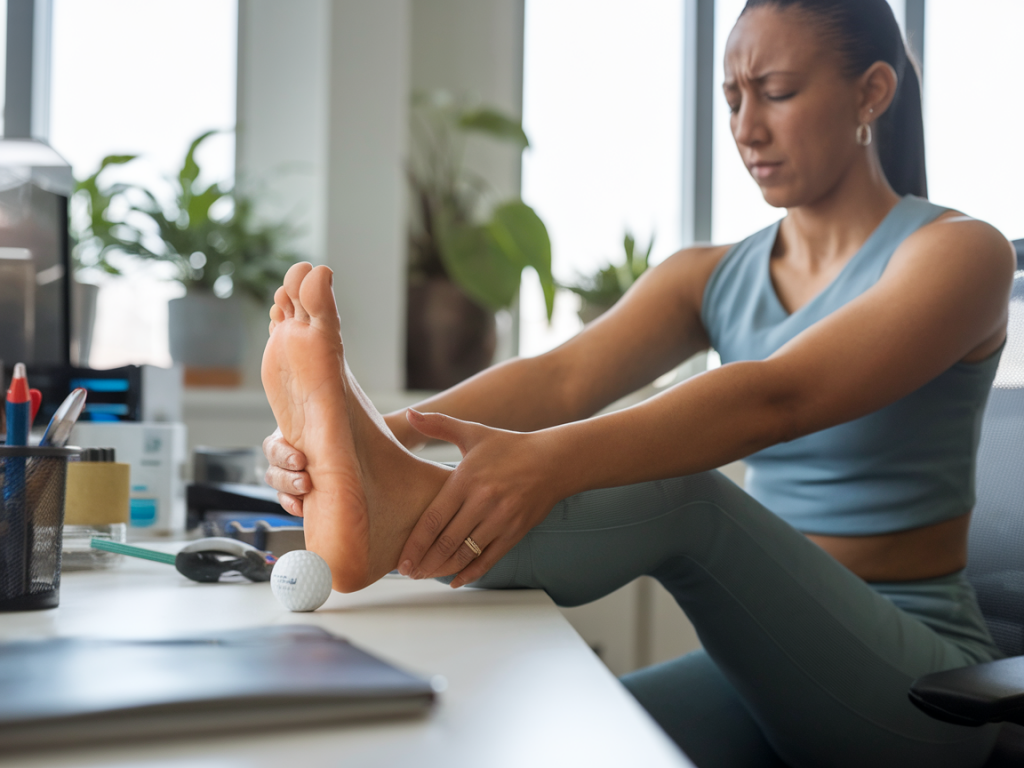
I spend a lot of time thinking about small, consistent habits that make feet happier — especially for people who sit for much of the day and notice the early twinges of bunion pain. If you’re juggling deadlines, meetings, and long hours at a desk, a focused 10-minute foot resilience routine can reduce discomfort, improve mobility, and slow the progression of mild bunions. Below I share a simple, research-informed routine I use and recommend regularly. It’s practical, easy to fit into a daily schedule, and built around gentle strengthening, mobility, and short-term load management.
Why a 10-minute daily routine helps
From my experience and the research I follow, consistency beats intensity for long-term foot health. Mild bunions (hallux valgus) develop over time, often influenced by footwear, foot mechanics, and muscle imbalance. Ten minutes a day focused on mobility, specific strengthening, and soft tissue care can:
Because office workers spend long periods sitting, combining this routine with regular movement breaks and sensible footwear creates the best environment for resilience.
Before you start — quick precautions
If you have moderate-to-severe bunion deformity, recent acute pain, inflammatory joint disease, or previous foot surgery, check with a clinician (podiatrist or physiotherapist) before trying new exercises. For mild pain and early bunion signs, the following is safe if done gently. Stop any movement that causes sharp or worsening pain.
What you’ll need
I sometimes use simple, low-cost items like a lacrosse ball for myofascial release and a small loop band for toe abduction work. Brands like Theraband or Perform Better make reliable resistance bands; gel toe spacers from Dr. Jill's or Bunheads can help with short practice sessions if they feel comfortable.
The 10-minute routine (timing included)
Below is a practical, office-friendly routine broken into four short segments. You can do this seated at your desk or standing in a quiet area. Aim to perform it once daily, ideally in the morning or mid-afternoon when stiffness tends to increase.
| Segment | Exercise | Time |
|---|---|---|
| Warm-up & plantar release | Plantar ball roll + ankle circles | 2 minutes |
| Mobility | Big toe dorsiflexion stretches (seated big toe lifts) | 2 minutes |
| Strength | Short foot exercise + toe spreading with band | 4 minutes |
| Proprioception & integration | Single-leg heel raises or seated heel lifts; toe alignment practice | 2 minutes |
Warm-up & plantar release (2 minutes)
Start seated. Place a massage ball, lacrosse ball, or golf ball under the arch of one foot. Apply gentle pressure and roll the ball along the arch for about 30–45 seconds, focusing on tender spots but avoiding sharp pain. This reduces resting tension in the plantar fascia and can relieve compensatory tightness that affects toe mechanics.
Finish with 30 seconds of ankle circles each direction per foot to encourage ankle mobility and blood flow. Keep movements smooth and within a comfortable range.
Big toe mobility (2 minutes)
I prioritise first ray mobility because the big toe’s ability to dorsiflex (lift up) is critical for normal gait and reducing undue forces on the bunion. Try these two quick drills:
If dorsiflexion feels very restricted, perform gentle joint mobilisations: with one hand stabilising the metatarsal head, use the other to lift the big toe upward into dorsiflexion — no pain, just a comfortable stretch.
Strengthening (4 minutes)
Strength work is about rebalancing the intrinsic muscles that help keep toes aligned. Here’s a practical combo:
These exercises target the abductor hallucis and dorsal interossei, muscles that support toe alignment and arch control.
Proprioception and integration (2 minutes)
End with short balance and load tasks so the foot learns to use the gained mobility and strength under functional conditions.
Finish by wiggling your toes and walking a few steps, focusing on smooth toe-off through the big toe.
How to fit this into an office day
Footwear and small tools that help
During the day, choose supportive but roomy shoes for forefoot space. Look for: wide toe box, low to moderate heel (no high heels), and a flexible forefoot with some structure under the arch. Brands such as Altra, New Balance, and Loake’s more ergonomic lines offer wider toe boxes. If you need additional support or pressure redistribution, consider a consult with a podiatrist who may recommend prefabricated orthoses or custom insoles.
When to seek professional help
If pain increases, you notice persistent inflammation, or the toe alignment worsens despite daily practice, see a podiatrist or physiotherapist. They can assess structural factors, gait mechanics, and prescribe targeted interventions like custom orthotics, manual therapy, or a progressive strengthening program.
Try this 10-minute routine for several weeks and track how your stiffness and pain change. Small, sustainable steps are what build resilience. If you’d like, I can share a printable one-page version of this routine or a short video demonstrating each exercise — tell me which you prefer and I’ll put it together.