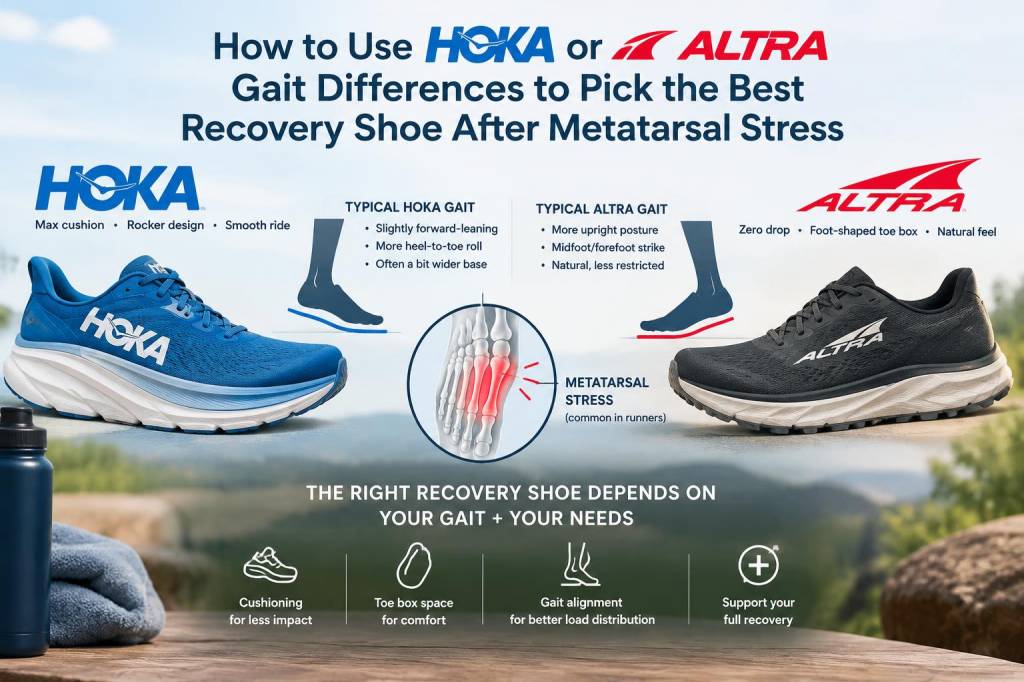
I recently worked through a friend’s recovery after a metatarsal stress response, and one of the toughest but most practical decisions we tackled was: which shoe will actually help healing — a Hoka or an Altra? Both brands are popular with people who want comfort and support, but they achieve that comfort in very different ways. Below I explain how those design choices matter when you’re protecting sore metatarsals, how to choose between them depending on your symptoms and goals, and practical tips for fitting, modifying, and progressing back to activity.
Why the brand (and gait philosophy) matters for metatarsal stress
Metatarsal stress injuries are about repeated load to the forefoot. That load gets influenced by cushioning, sole geometry, heel-to-toe drop, stiffness, and the way the shoe lets your toes splay. Hoka and Altra aim to reduce discomfort, but their philosophies differ:
Hoka: maximal cushioning, thicker midsole foams, and often a pronounced rocker or “Meta-Rocker” that helps roll the foot through the step.Altra: zero-drop platform and a wide “FootShape” toe box that encourages a natural toe splay and a more even forefoot loading in many users.Those differences mean each brand can be better or worse depending on your specific symptoms, gait pattern, and whether you want passive offloading (less motion and impact) or more natural mechanics that reduce focal pressure through toe spreading and midfoot control.
Practical goals for a recovery shoe after a metatarsal stress response
Before choosing a shoe, decide what you need most in the short term (first 4–8 weeks) versus longer-term rehab:
Short term: reduce peak pressure on the painful metatarsal, limit excessive toe dorsiflexion, and allow comfortable walking with minimal pain.Mid term: gradually reintroduce normal loading patterns and encourage foot intrinsic strength without sudden spikes of force.Long term: return to preferred activity with footwear that balances protection and natural function.Hoka: when it’s a strong option
I reach for a Hoka when the priority is cushioning and passive offloading — for example, if the metatarsal pain spikes with each step, or if the person needs to be on their feet a lot and requires maximum shock absorption.
Why it helps: Hoka’s thick foam and rocker geometry shorten the effective forefoot lever and smooth the transition from heel strike to toe-off. That reduces peak forefoot forces and can feel immediately less painful.Good models to try: Bondi (great for maximum cushion), Clifton (lighter but cushioned), or Mach/Clifton with mild rocker. For stability plus cushion, the Arahi or Gaviota are options.Limitations: Some Hoka models have a narrower toe box compared to Altra. If your toes are cramped, the shoe might shift load medially. Also, because of the higher stack and rocker, some people feel a different gait pattern that requires a short adaptation period.Altra: when it’s a strong option
Altra is my go-to when the issue seems to be excessive localized pressure because the forefoot is narrow or the toes are cramped in usual shoes. Altra’s wide toe box allows toe splay and redistributes pressure across the metatarsal heads.
Why it helps: Zero-drop and wide toe-box reduce dorsiflexion at the toes and spread load across the forefoot. In people with a tendency to overload a single metatarsal, giving the toes room to share load can be very helpful.Good models to try: Torin or Escalante for cushioned but foot-shaped options, or the Provision for some stability features.Limitations: Altra’s lower stack and minimal heel-to-toe differential mean less passive shock absorption compared with Hoka. If you need extra cushioning immediately after an injury, Altra alone may feel too firm.How to choose between them — questions to ask yourself
Answer these quick questions to narrow options:
Is walking currently very painful at each step? If yes, start with Hoka for maximal cushion and rocker.Do your toes feel squished in most shoes, or do you notice a single hot spot under one metatarsal? If yes, try an Altra to allow toe splay and redistribution.Do you have a pronounced forefoot varus or big toe mobility problems? These biomechanics can change which shoe helps — consult a clinician for orthotic needs.Will you be standing long hours on hard surfaces? Favor Hoka initially for cushioning.Practical fitting and modification tips
Choosing the right model is only part of the equation. Fit and small shoe mods make a big difference.
Size up if needed: For recovery, make sure there’s at least a thumb’s width of space in the toe box, especially in Altra where toes should splay.Socks: Use a thin, moisture-wicking sock—thicker socks can reduce fit precision. Consider padded socks if weight-bearing pain is significant.Insoles and metatarsal pads: Adding a metatarsal pad or a proper orthotic with a metatarsal dome can offload pressure from a specific metatarsal head. This can be used in both Hoka and Altra, but check internal volume: Hokas often have more room vertically due to higher midsoles, while Altra may require a lower-profile insole.Rocker soles: If pain is at its worst during toe-off, prioritize shoes with a built-in rocker or try adding a rocker-style insole. Many Hokas have a smoother rocker that decreases toe extension demand.Test walk: Walk on a variety of surfaces in the store (or during a trial period). Pain that settles quickly with the shoe is a good sign; if pain increases after a short walk, reassess.Progression plan — how to use the shoe during recovery
A shoe is a tool — it should be part of a measured return plan.
Week 1–2: Prioritize pain-free walking. Use the most protective shoe (often Hoka) and keep daily steps low if pain is present. Use ice and relative rest as needed.Week 2–6: Introduce short walks in Altra if toes were compressed, or alternate Hoka and Altra to get both cushioning and natural toe splay. Begin gentle foot intrinsic strengthening and mobility work as tolerated.Beyond 6 weeks: Gradually increase activity and transition to a shoe that best matches your long-term needs. If you’re returning to running, do it slowly and consider professional gait analysis or custom orthotics if pain persists.When to see a clinician
If pain is worsening, persists through rest, or if you have night pain, swelling, or numbness, see a healthcare professional for imaging and a targeted plan. A podiatrist or physiotherapist can prescribe metatarsal pads, rigid rocker soles, or specific orthoses that integrate with either Hoka or Altra.
| Feature | Hoka | Altra |
|---|
| Stack height / Cushioning | High / maximal | Moderate |
| Heel-to-toe drop | Usually positive drop (4–8 mm) | Zero drop |
| Toe box | Narrower (model-dependent) | Wide, foot-shaped |
| Rocker / roll | Pronounced (Meta-Rocker) | Less pronounced |
| Best for | Immediate cushioning and offloading | Toe splay and pressure redistribution |
Both brands can be useful in recovery; often the smartest strategy is to use each brand for what it does best — Hoka for cushion and rocker-driven offload, Altra for space and natural load distribution — and pair them with pads or orthotics when needed. And remember: gradual progression and listening to pain are your best guides.