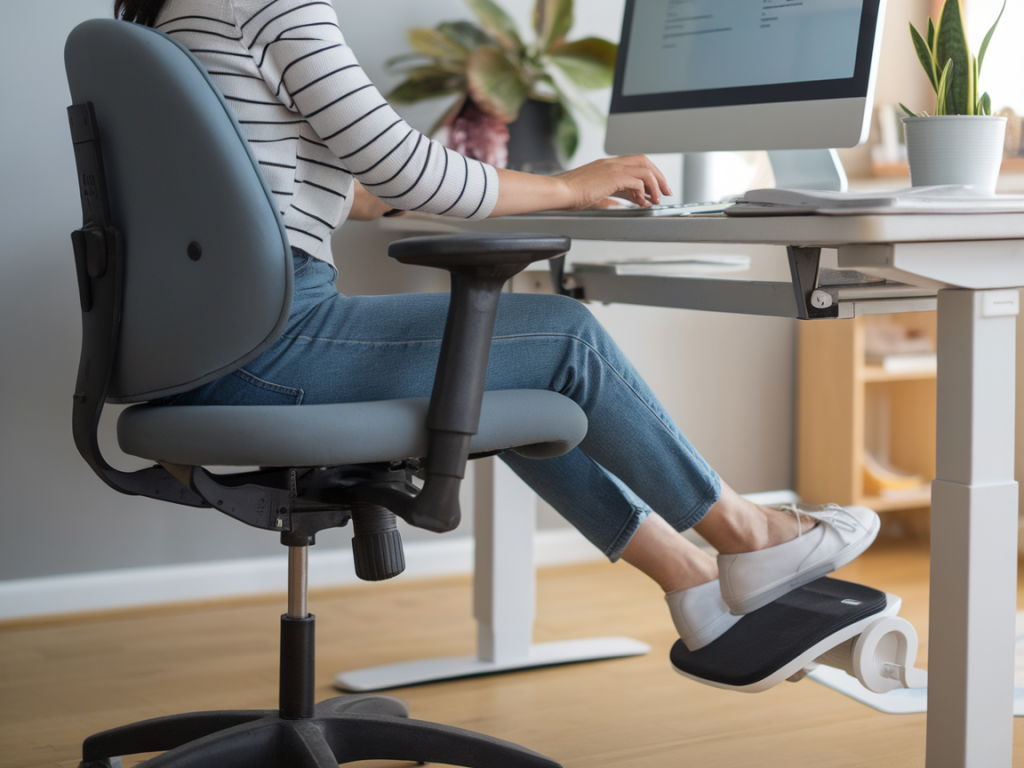
Forefoot numbness at your desk can be more than a minor annoyance — it can signal that something about your workstation setup or daily habits is compressing nerves, restricting circulation, or overloading structures in your feet. I’ve seen this in clients and felt it myself after long days hunched over a laptop: that tingling or loss of feeling across the ball of the foot and toes that makes standing up oddly disorienting. Below is a practical, step-by-step workstation and mobility check you can run today to identify likely causes and make small changes that usually help fast.
What might be causing forefoot numbness?
Before we jump into checks, here are the common mechanisms I look for:
Direct pressure on the forefoot — the front edge of an office chair or a hard desk edge can press the metatarsal heads and compress nerves or small blood vessels.Shoe-related compression — narrow toe boxes, high heels or firm insoles that push toes together raise forefoot pressure.Prolonged ankle/foot positions — crossing legs, sitting on feet, or resting weight on the outer ankle can compress nerves (common peroneal nerve or interdigital nerves).Poor circulation — sitting still a long time reduces blood flow and can feel like numbness or tingling.Entrapment neuropathies — tarsal tunnel syndrome or interdigital (Morton’s) neuroma can be aggravated by poor posture or footwear.Immediate desk-side checks (5–10 minutes)
Do these simple checks while sitting at your desk. They take less than 10 minutes and will tell you if your chair or habits are directly contributing.
Edge pressure test: Slide forward so the front edge of the chair sits at the base of your thighs. Place your hand under the edge near where your feet rest. If you feel a hard or narrow edge pressing into the pads of your thighs or you notice the edge compresses under your knees, that same edge may be pressing into your forefoot when your feet rest flat. Try sitting back and see if numbness changes.Shoe off check: Take one shoe and sock off (in private if needed). Sit naturally and rest your bare foot on the floor. Does the numbness feel reduced, shift, or disappear? If so, footwear is likely a major contributor.Foot position test: With feet flat, lift your heels so only the forefoot bears weight. Hold 10–15 seconds. Then lift toes and rest weight on the heels. Compare sensations. Forefoot-only positions that reproduce numbness suggest local compression.Crossed-leg check: Sit with legs uncrossed for several minutes and notice changes. Then cross one leg for a minute and uncross — does numbness onset/change quickly? Rapid changes with crossing point to mechanical nerve compression.Circulation wiggle: Tap or shake your feet briskly for 30 seconds and wiggle toes. Does sensation return quickly? If yes, short-term circulation may be part of it; if not, nerve irritation might be stronger.Workstation adjustments to try right away
Small changes often help more than you expect. Try these and reassess your symptoms after 30–60 minutes.
Swap or cushion the chair edge: If your chair has a pronounced forward edge, add a soft seat cushion or consider a seat with a waterfall front (sloping edge). Products like a memory foam seat pad or a gel donut can reduce pressure.Adjust seat depth: Pull the chair back so the seat supports your thighs without the edge pressing behind the knees. Your feet should rest flat with knees at roughly 90–100°.Raise or lower chair height: Ideally, your feet should be flat on the floor. If the desk prevents that, use a footrest or raise the chair and adjust keyboard height. A stable footrest or simple box can offload pressure from the forefoot.Change foot position often: Keep a small footrest or roller under the desk to alternate foot positions every 10–15 minutes. Movement reduces both compression and circulation problems.Use footwear supportive of toe splay: Avoid narrow, pointed shoes at work. Brands with wider toe boxes (Altra, Vivobarefoot for natural options, or many cushioned trainers) reduce metatarsal pressure compared to slim dress shoes or high heels.Mobility and self-care checks you can do at your desk or between meetings
Add these gentle mobility moves into your day — I recommend a few repetitions every hour.
Toe spreads and lifts: While seated, try to spread your toes wide for 5–10 seconds, then lift only the toes while keeping the heels down, then lift the heels and press toes down. Repeat 8–12 times per set.Plantar massage: Use a small ball (lacrosse or tennis) under your forefoot and roll gently side to side for 60–90 seconds. Avoid sharp pain — we’re aiming for soothing pressure.Ankle pumps and circles: Point and flex your ankle 15–20 times and then circle the ankle each direction 8–10 times. These encourage blood flow and reduce transient numbness.Short walks: Stand and walk for 2–3 minutes every 30–60 minutes. Even a hallway loop improves circulation and repositions weight-bearings that might be compressing nerves.Strengthening and longer-term habits
If you get recurrent numbness, add these practices a few times per week.
Intrinsic foot strengthening: Toe curls with a towel — place a small towel on the floor, use your toes to scrunch it toward you 10–15 times per foot.Arch lifts: While standing, try to lift the medial arch without curling the toes (short foot exercise). Hold 5–10 seconds, repeat 10–12 times.Calf and ankle mobility: Tight calves can change how weight distributes across the forefoot. Regular calf stretches and eccentric calf exercises (like slow heel drops on a step) help.When to seek professional help
If your numbness persists despite reasonable changes, is worsening, or you have associated sharp pain, burning, weakness, or changes in skin color/temperature, consider seeing a podiatrist, physiotherapist, or your GP. They can assess for neuromas, tarsal tunnel syndrome, peripheral neuropathy, or circulation issues. A gait or footwear assessment — sometimes with pressure-mapping (used in clinics and specialty shoe stores) — can be very revealing.
Quick checklist table
| Do this now | What to look for |
| Remove shoe and test | Sensation improves → footwear likely culprit |
| Slide off chair edge / cushion seat | Less numbness → chair edge pressure |
| Uncross legs and walk | Symptoms improve → positional compression/circulation |
| Try toe spreads and ankle pumps | Quick relief → reversible compression/poor circulation |
If one change helps, lean into it — swapping shoes or adding a cushion (even temporarily) often solves the issue. If nothing changes with simple fixes, book an assessment so you can rule out nerve entrapment or systemic causes. And if you’d like, tell me what your chair, shoes, and daily routine look like — I can suggest more tailored tweaks that fit your workday.