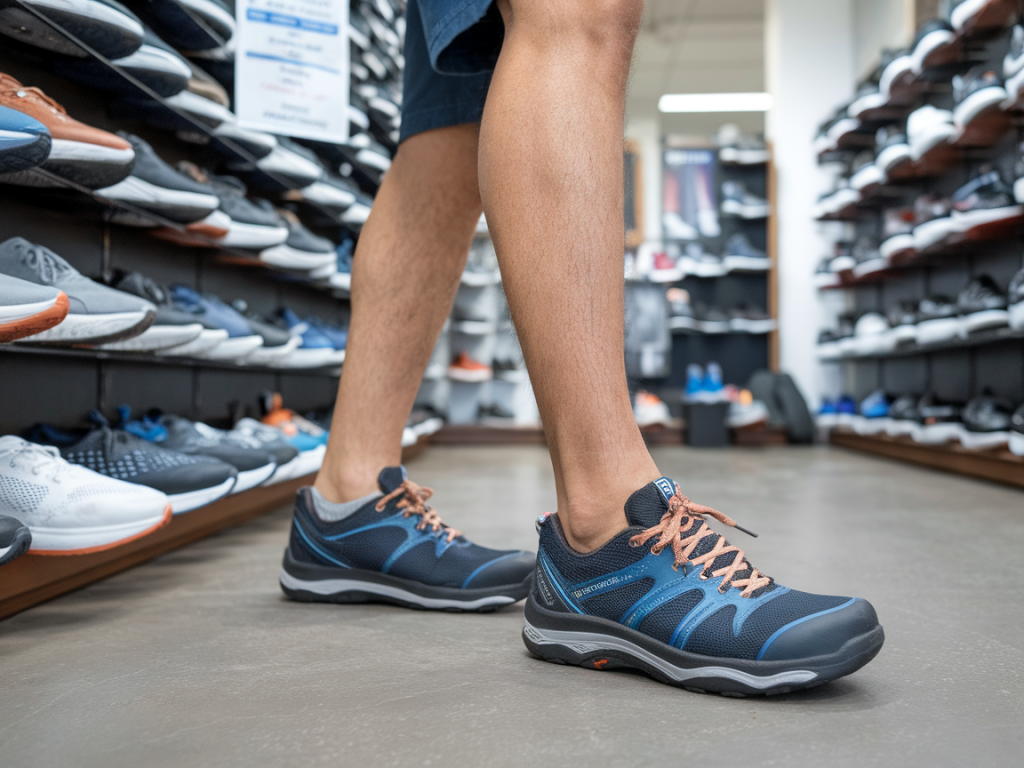
I get asked a lot: “How do I find walking shoes that actually fit my wide feet?” It’s a question I’ve lived with — part frustration, part detective work — and over time I’ve learned that finding the right pair is less about chasing trendy designs and more about understanding a handful of shoe features that make everyday walking comfortable and sustainable.
What “wide” really means
When people say they have wide feet, they can mean different things: a broader forefoot, splayed toes, a high instep, or a combination. Shoe brands use width markers (D, E, 2E, 4E, etc.), but those letters don’t tell the whole story. Two shoes both labeled “2E” can feel very different depending on last shape, toe box design, and materials. So the first mindset shift I offer: think in terms of fit characteristics (toe box volume, midfoot height, heel hold) rather than only the width letter.
Features that actually matter for wide feet
- Roomy, foot-shaped toe box: This is the single most important feature. Your toes should be able to splay naturally when you stand and walk. Look for descriptions like “wide toe box,” “foot-shaped,” or brands that prioritize toe splay (Altra is a well-known example for wide toe boxes).
- True width options: Brands that offer multiple width fittings (e.g., New Balance, Brooks, Hoka) make it much easier to find a fit without guessing. If you’re between sizes, try both length and width variations.
- Removable insole: Being able to remove the sockliner creates extra volume for wide feet and for accommodating orthotics.
- Flexible or stretchable upper: Materials like knit or soft leather can adapt to the shape of your forefoot. Avoid very rigid synthetics if you need more volume up front.
- Generous forefoot depth: Width is one thing, but vertical space (depth) matters when you have a high instep or bunions. A shoe with good forefoot depth feels less tight even if the width is adequate.
- Secure heel cup: Wide feet don’t mean you can ignore heel fit. A slip-prone heel forces toe gripping and causes blisters. Look for shoes that balance a roomy forefoot with a locked-in heel.
- Supportive midsole with cushioning: Wide feet can benefit from a stable platform that distributes pressure well. Too soft a sole can allow feet to splay excessively and cause fatigue; too firm can feel harsh. Aim for a supportive but cushioned midsole.
- Orthotic compatibility: If you use custom orthotics, check for a removable liner and enough depth. Orthotics often require exchanging the factory insole for your device.
- Adjustable lacing system: A good lacing pattern can create space where you need it and clamp where you don’t. Look for shoes with enough eyelets to fine-tune the fit.
Practical steps to choose the right pair
- Measure later in the day: Feet swell through the day. Measure or try shoes in the afternoon or evening to avoid under-sizing.
- Try the shoes with the socks you’ll wear: A thick walking sock changes fit. Bring your usual socks.
- Stand, walk, and climb stairs in the store: Short hops in the aisle won’t reveal rubbing or pressure points. Walk for several minutes, and try uphill and downhill movements if possible.
- Check the toe spacing: There should be about a thumb’s width of space from your longest toe to the front of the shoe when standing. But more importantly, the toes shouldn’t feel squashed side-to-side.
- Test the heel: Your heel should sit securely without excessive sliding. A little movement is okay, but repeated slipping means blister risk.
- Bring the shoes home and test them: Many brands have flexible return policies. Take advantage — wear them on a few short walks to confirm comfort.
Common reader questions
Can I just buy a half-size up to get more width? Not always. Lengthening the shoe can help toe space, but it won’t increase forefoot width or depth. A half-size up may cause heel slip, which in turn causes other problems. It’s better to find shoes available in wider fittings or with inherently broader lasts.
Can narrow shoes be stretched? Leather and some knit uppers can be stretched slightly, but stretching is limited and uneven — it’s not a reliable solution for significantly wide feet. And stretching often changes fit in other areas (heel or midfoot), leading to new issues.
Are wide shoes ugly? The stigma that wide-fitting shoes look clunky is fading. Many mainstream brands now offer sleek models in wide fittings: New Balance 990/928 lines, Brooks Ghost/Adrenaline in wide fits, Hoka Bondi and Clifton in wide options, and Altra’s naturally wide models. You don’t have to sacrifice style for comfort.
Do I need orthotics? Not everyone. If your foot pain is linked to structural or biomechanical issues (plantar fasciitis, severe overpronation, etc.), a custom or over-the-counter orthotic might help. The first step is finding a shoe that fits well; then you can evaluate whether additional arch support or correction is necessary. Many prefabricated orthoses pair well with shoes that have removable insoles and adequate depth.
Quick brand and model suggestions
Brands that frequently work well for wide feet:
- New Balance: Known for multiple width options across walking and running ranges — look at 990 and 928 for walking stability.
- Brooks: The Ghost and Adrenaline have wide options and reliable cushioning structures.
- Hoka: Hoka Bondi and Clifton come in wide fits and offer plush cushioning with a stable base.
- Altra: Naturally wide, zero-drop toe box — great if you value foot-shaped toe room.
- Orthofeet and Vionic: Brands focused on foot health and orthotic-friendly designs, useful if you need medical-grade support.
- Birkenstock & sandals: For less structured walking (errands, light strolls), foot-shaped sandals with removable footbeds help maintain comfort without cramping toes.
Simple checklist to bring when shoe shopping
- Time your visit for later in the day.
- Bring the socks you normally wear for walks.
- Walk for at least 10 minutes in the store or use a treadmill if available.
- Confirm removable insole and measure internal depth if you use orthotics.
- Try multiple brands and widths — don’t settle for the first pair that “almost” fits.
| Feature | Why it matters | Examples |
|---|---|---|
| Roomy toe box | Allows natural toe splay, reduces bunion pressure and nerve irritation | Altra, New Balance 990 (wide), Hoka (wide) |
| Removable insole | Enables orthotic use and extra internal volume | Brooks Ghost, New Balance walkers |
| Stretchable upper | Adapts to bunions/high instep for less rubbing | Knit uppers, soft leathers |
| Supportive midsole | Distributes load, prevents excessive foot splay | Hoka, Brooks, New Balance stability models |
Finding the right walking shoe for wide feet is a mix of understanding the shoe’s shape, trying a few sensible options, and prioritizing toe-space and internal volume. Over time I’ve noticed how much a properly fitting shoe reduces daily foot fatigue and prevents niggles from becoming persistent problems. Take time with the fit — your feet will thank you on every step.