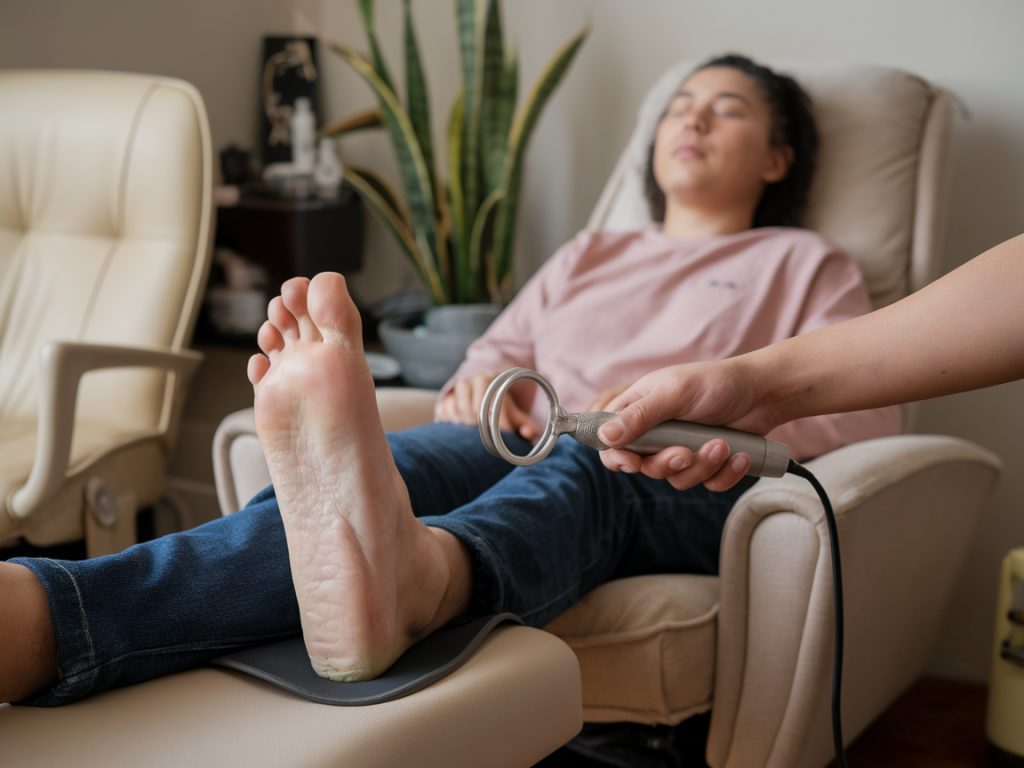
I often hear from readers who wake up with a burning or aching sensation under the ball of the foot, discomfort when pushing off during walking or running, or sharp twinges between the toes. Forefoot pain — whether it’s metatarsalgia, a suspected Morton's neuroma, or tender spots linked to tight muscles and connective tissue — is common, and manual massage combined with targeted trigger-point release can be a simple, effective part of a care plan you can do at home.
What forefoot pain might be telling you
Before we get hands-on, it helps to know what’s likely causing the pain. Common presentations include:
- Metatarsalgia: generalized pain under the metatarsal heads (ball of the foot), often worse with activity or high heels.
- Morton’s neuroma: burning, tingling, or a sensation of a pebble between the toes, typically between the third and fourth toes.
- Sesamoiditis: focal pain beneath the big toe joint, often from repetitive loading.
- Referred pain from calf and intrinsic foot muscles: tightness or trigger points higher up can change foot loading and create forefoot soreness.
Manual work won’t magically fix structural problems like severe bunions, advanced arthritis, or a ruptured tendon, but it often relieves pain that comes from tight tissues, adhesions, or hypersensitive trigger points and helps reduce load on painful areas.
Principles I follow when using manual massage and trigger point release
When I work on my own feet or guide a client, I keep these principles in mind:
- Gentle and progressive: Aim for tolerable discomfort, not pain that spikes or lingers after the session.
- Short and frequent: 5–10 minutes twice daily is more effective and sustainable than one long aggressive session.
- Combine local and proximal work: Addressing the calves, peroneals, and intrinsic foot muscles often improves forefoot symptoms.
- Follow with movement: Mobilizations and toe/finger exercises reinforce the tissue changes from massage.
- Watch for red flags: sudden swelling, loss of feeling, severe sharp pain, fever, or signs of infection need professional assessment.
Tools I like and why
You don’t need fancy gear. I often recommend items you can find online or at a pharmacy:
- Hands/fingers: best for precise pressure and feedback.
- Small lacrosse or massage ball: great for the plantar surface and can reach deeper tissue.
- Toe separators or spacers: helpful after release to restore toe alignment (Crepe toes, YogaToes-style).
- Soft, portable tools: a thumb saver or a handheld massage stick can help if your thumbs tire.
Step-by-step: a practical 8–10 minute routine for forefoot pain
Do this seated on a chair with your foot resting on the opposite knee so you can see and control pressure. If you prefer, stand and roll a ball under the foot but start seated if pain is acute.
Warm-up (1–2 minutes)
- Rub the entire sole gently with your palms to increase circulation and sensitivity awareness.
- Use long strokes from heel to toes, then circle around the ball of the foot to soften tissue.
Plantar massage with fingers (2–3 minutes)
- Use your thumbs to press each metatarsal head (the “balls” under each toe) in turn. Hold for 6–8 seconds on areas that are tender but not sharply painful.
- Repeat 2–3 times per spot, moving gently between them. Breathe slowly and avoid clenching the toes.
Trigger-point release with a ball (2–3 minutes)
- Place a small lacrosse ball under the painful area and lean into it. Find a tender “knot.”
- Hold steady pressure for about 20–30 seconds. You may feel an easing or a change in sensation; stop if your pain shoots down the leg or toes intensely.
- After the hold, roll the ball slowly back and forth for 30–60 seconds to smooth the tissue.
Cross-friction and toe mobilization (2 minutes)
- Using your index finger, perform small transverse strokes across the flexor tendons and plantar plate just behind the metatarsal heads (imagine rubbing side-to-side). Keep movements short and controlled for 30–60 seconds.
- Gently wiggle and lift each toe — 10 repetitions per toe — to mobilize the metatarsophalangeal joints and reduce stiffness.
Calf and posterior chain release (optional, 2–3 minutes)
- Use a foam roller or ball on the calf muscles to reduce tension that can increase forefoot loading. Short holds (20–30 seconds) on tender spots are helpful.
Aftercare: exercises to consolidate the release
After manual work, I always follow with active movement to help the nervous system recalibrate and to load the tissues appropriately.
- Toe curls with a towel: place a small towel on the floor and pull it toward you using your toes — 2 sets of 10.
- Marble pickups: pick up 8–10 marbles with your toes and drop them into a cup — 1–2 rounds.
- Short single-leg balance with toe spread: stand on one foot and consciously spread the toes for 20–30 seconds, repeat 2–3 times.
How often and how long?
I recommend brief work 1–2 times per day for 2–4 weeks and monitoring whether symptoms reduce by 30–50% in that time. If you see steady improvement, keep the routine as part of a maintenance plan (2–3 times per week). If pain worsens or doesn’t improve after 4–6 weeks, seek assessment from a podiatrist or physiotherapist who can assess biomechanics, footwear, and whether orthotics or imaging are needed.
When to be cautious and when to see a professional
Stop self-treatment and see a clinician if you notice:
- Sudden severe pain, swelling, or bruising.
- Numbness, persistent tingling, or loss of strength.
- Visible deformity, open wounds, or signs of infection.
- No improvement after conservative care, or pain worsening despite cautious self-management.
Practical tips I share with clients
- Check your footwear: choose shoes with a roomy toe box, low heel, and adequate forefoot cushioning. Brands with wide last options or specifically designed for comfort (e.g., Brooks, Altra, or ECCO) can help reduce load.
- Limit high-heel or narrow-toe shoes while recovering; these increase pressure on the metatarsal heads.
- Consider temporary padding: metatarsal pads or off-the-shelf forefoot cushions can redistribute pressure while you treat the tissue.
- Be patient: tissue behaviour and nervous system sensitivity change gradually — consistent gentle work usually beats aggressive one-off treatments.
If you’d like, I can create a printable checklist of the routine or record a short video guiding you through the exact finger and ball placements I use. Tell me which format would help you most, and I’ll put it together.