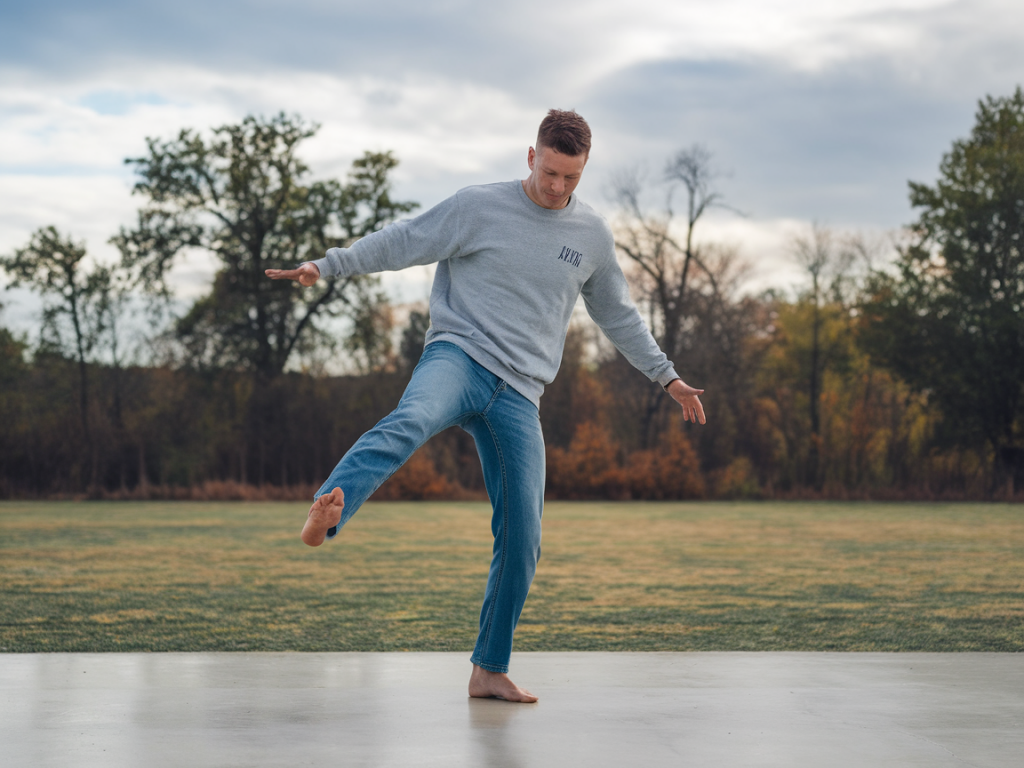
I often find that the simplest habits—done consistently—have the biggest impact on how we move. Barefoot balance drills are one of those small practices that can quietly improve walking mechanics, strengthen the feet and ankles, and reduce fall risk over time. Below I share straightforward, evidence-informed exercises you can do at home, how to progress them safely, and practical cues that make a real difference in gait and confidence.
Why barefoot balance drills?
When we take our shoes off, our feet get direct sensory feedback from the ground. That feedback helps the nervous system fine-tune muscle activation around the ankles, hips and core. Over time this can improve balance reactions and the timing of gait phases—two important factors in preventing trips and falls. Research also shows that training balance and proprioception can reduce fall risk in older adults and enhance gait stability in people of all ages.
Doing these drills barefoot (or in thin, flexible socks) increases foot and ankle mobility and improves tactile input. That said, "barefoot" doesn’t mean risky—I'll include safety steps and progressions so you can adapt the drills to your comfort and environment.
General safety and setup
Before we start, a few quick safety notes:
- Choose a safe surface: a carpeted floor, yoga mat, or non-slip hardwood is ideal. Avoid wet or highly slippery surfaces.
- Have support handy: A chair, countertop, or wall nearby lets you catch yourself during progressions.
- Start seated if needed: If you have balance concerns, begin practicing weight shifting while seated and progress to standing as you feel secure.
- Listen to your body: Mild muscle soreness is normal; sharp pain or sudden dizziness is not. Stop and check form, or regress the exercise.
- Frequency: Short daily practice (5–15 minutes) is more effective than long, infrequent sessions.
Basic warm-up (2–5 minutes)
Start by waking up the feet and ankles. I do this every session to improve circulation and readiness.
- Ankle circles: 10 each side, slow and controlled.
- Toe articulation: Spread your toes wide, then curl them. Repeat 8–10 times.
- Heel-toe rocks: Shift from heels to toes while standing with hands lightly on a chair—20 reps.
Core barefoot balance drills
I structure these drills into three categories: static balance, dynamic weight shift, and gait-specific. Start at the easier variations and progress after 1–2 weeks when the movement feels steady.
Static balance
- Double-leg stands with soft toes: Stand barefoot with feet hip-width apart. Soften the knees and imagine distributing weight evenly across the three points of each foot (heel, base of big toe, base of little toe). Hold 30–60 seconds. Focus on breathing and subtle micro-adjustments.
- Single-leg stand: Shift to standing on one foot with light touch on a chair. Aim for 10–20 seconds per side, 3 reps. Progress to no touch and longer holds.
- Single-leg with head turns: Once single-leg standing is steady, add slow head turns left and right to challenge vestibular control. Keep hips level and avoid gripping in the shoulders.
Dynamic weight-shift drills
These are the ones that directly train the transitions we need during walking.
- Figure-of-eight weight shifts: Stand with feet hip-width and practice shifting weight in a gentle figure-of-eight pattern from one foot to the other. Keep the feet grounded but vary the pressure. 1–2 minutes.
- Stepping weight-shifts: Lift one foot just enough to take a small step forward and replace it—without moving the other foot. This trains the timing of single-leg loading used in gait. 10–20 reps per side.
- Medial/lateral shifts on one leg: Stand on one leg and shift your center of mass slightly side to side over your support foot. This trains ankle inversion/eversion control. 30–45 seconds each side.
Gait-specific drills
These drills translate balance into better walking mechanics.
- Sensory heel-toe walks: Walk 10–15 steps barefoot in a straight line, placing attention on rolling from heel to toe and feeling the ground beneath each part of the foot. Pause and repeat 3–4 times.
- Slow-motion walking: Walk at half speed focusing on controlled weight transfer and knee alignment. This reveals and corrects quick, sloppy transitions that increase fall risk. 2–4 lengths of a hallway.
- Backward walking: With hands on a countertop for safety if needed, walk backward slowly for 6–10 steps. This strengthens posterior balance reactions and challenges coordination.
Progressions and variations
Once the basics feel easy, increase the challenge gradually. Here are progressions I use with clients and at home:
- Unstable surfaces: Move from carpet to a foam pad or Airex mat to increase proprioceptive demand.
- Dual-tasking: Add simple cognitive tasks like counting backwards or carrying a cup of water while balancing to simulate real-life challenges.
- Eyes closed: Close your eyes for single-leg stands to rely more on proprioception. Have support nearby for safety.
- Longer holds and more reps: Add 5–10 seconds to holds and 1–2 extra sets as stability improves.
Specific cues I use (and why they help)
Verbal cues can simplify complex sensations into actionable steps. I use these with myself and others:
- “Press through the tripod of the foot” — reminds you to distribute weight and reduce collapse of the arch.
- “Soft knees, tall spine” — encourages postural control without locking joints.
- “Lead with soft landing” — for heel-toe walks to reduce impact and improve shock absorption.
- “Small controlled shifts” — prevents overcorrection and trains fine motor control.
How often and how long?
Consistency beats intensity. Aim for a short session most days:
- Beginner: 5–10 minutes daily (3–5 days/week minimum).
- Progressing: 10–15 minutes daily with 2–3 sets of each drill.
- Maintenance: 10 minutes 3–4 times a week.
When to wear shoes or orthotics
Barefoot drills are great for sensory feedback, but supportive footwear or orthotics still have their place. If you have high arches, diabetic neuropathy, plantar fasciitis, or significant foot deformities, check with a clinician before prolonged barefoot work. I often recommend a blended approach:
- Do balance and mobility drills barefoot for short periods.
- Use supportive footwear (e.g., a stable sneaker like the Altra or Hoka models for neutral cushioning) during longer walks, uneven terrain, or if your feet feel fatigued.
- If you use orthotics, you can sometimes remove them for specific proprioceptive work, but reinsert them for general walking as advised by your practitioner.
Tracking progress
Simple measures help you see improvement and keep motivation high:
- Time how long you can hold a single-leg stand—track monthly improvements.
- Note how confident you feel on uneven ground or stairs.
- Record walking steadiness using a short timed walk (e.g., 6-meter walk) and note speed and perceived stability.
Real-life integration
The best part is these drills are easy to fold into daily life. I do single-leg stands while brushing my teeth, slow heel-toe walks down a hallway after a cup of tea, and sensory foot work while watching TV. Over weeks, those small moments add up: my step feels more confident, my ankles feel stronger, and I’m less likely to overreact to an unexpected uneven surface.
If you'd like, I can create a printable 4-week barefoot balance plan with daily micro-sessions you can follow. Tell me your current balance level (comfortable, cautious, or limited), and I’ll tailor the plan for you.