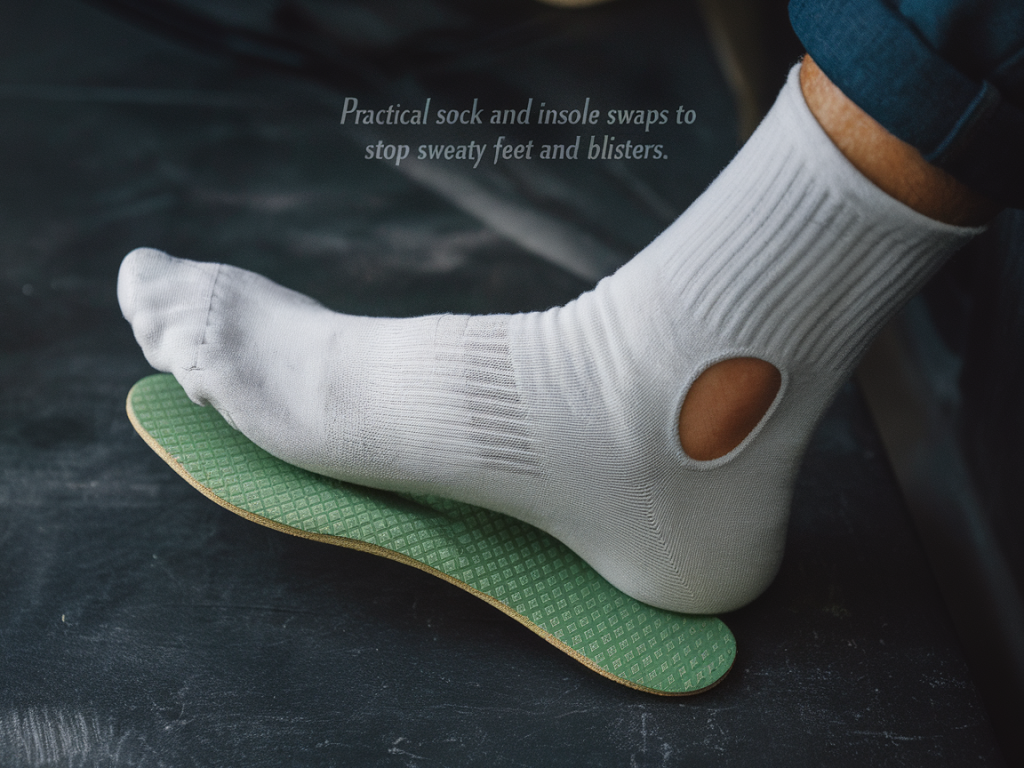
I used to think sweaty feet and blister hotspots were just part of being on my feet a lot — an annoying trade-off for an active life. After years of testing different shoes, routines and products, I discovered that many blister and sweat problems can be dramatically reduced by simple swaps in socks and insoles. Here I share the practical, research-backed changes I use and recommend to clients and readers. These are the swaps that actually make a difference in day-to-day comfort, not expensive gimmicks.
Why socks and insoles matter more than you realise
Feet sweat. That’s normal and helpful. The trouble starts when moisture is trapped against the skin and friction increases between layers (skin vs sock, sock vs shoe). Blisters form where shear forces and moisture combine. Insoles change how your foot sits and moves inside a shoe; socks change the microclimate at the skin and how layers slide.
So two small levers—sock material/fit and insole cushioning/shape—can dramatically reduce blister risk and sweaty discomfort. Below are the swaps I test first when someone describes hot, slippery, blister-prone feet.
Best sock swaps to reduce sweat and friction
Key principles:
Move moisture away from the skin (wicking).Reduce internal friction with a second-sock or low-friction fibres.Ensure good fit—too loose or too tight = rubbing.Practical sock swaps I use and recommend:
Switch cotton for merino or performance synthetics. Cotton holds moisture and increases friction. Merino wool (eg. Smartwool, Icebreaker) naturally wicks, breathes and resists odor. Synthetic blends (polyester, nylon with elastane) can be faster-drying and very durable—brands like Darn Tough, Falke or Balega are good options.Try two-layer or double-sock systems for extreme friction control. Wrightsock pioneered the double-layer running sock concept: inner layer moves with the skin while the outer layer moves with the shoe, which reduces shear force on the skin. I keep these for long hiking days or when I know blisters are likely.Consider thin liner socks for hot days. A lightweight liner (eg. Injinji toe socks or silk/polyester liners) can keep toes separated and reduce skin-on-skin friction. Injinji toe socks also help if your toes rub together.Use toe socks or separators when toes are a hotspot. I recommend Injinji for trail runs or shoes with tighter toe boxes—separating toes reduces friction and helps ventilation between toes.Choose the right thickness for the shoe and foot shape. Too thick creates pressure points; too thin allows foot movement. For running shoes I like 2–3 mm performance socks; for boots I use slightly thicker merino blends with good arch support.Fit cues to check:
Sock should not bunch up in the toe box or wrinkle on the sole.Heel should stay put and not slip up and down—sliding equals rubbing.Compression bands should be snug but not constrictive around the arch.Insole swaps that reduce hotspots and manage moisture
Insoles change contact, alignment, and pressure distribution. The right insole can reduce localised friction by improving fit and reducing foot movement inside the shoe.
Start with thin, breathable insoles for hot feet. Many stock insoles are dense foam that trap heat. Replace them with perforated or moisture-wicking insoles—Superfeet Breeze and Dr. Scholl’s Athletic Breeze are examples. They have ventilation channels and antimicrobial linings.Use a contoured insole to stabilise the foot. If your foot slides forwards in the shoe, you get more friction at toes. A mild arch-support insole (eg. Superfeet Green or Blue depending on shoe volume) can stabilise the rearfoot and midfoot without overcorrecting, reducing shear in the forefoot.Choose shock-absorbing heel cups for repetitive impact. Blisters can come from repetitive pounding. Gel heel cups or cushioned top-layers help disperse impact. I like removable gel heel inserts for trainers and work shoes when standing all day.Rotate insoles by activity. I use a thin vented insole for warm-weather runs and a slightly thicker contoured one for walks or standing shifts. Having two pairs of insoles to swap based on need is an easy habit that reduces moisture buildup and prolongs insole life.Materials comparison (quick reference)
| Material | Wicking | Friction | Best use |
| Merino wool | Good | Low-medium | Everyday, moderate-intensity, odor control |
| Performance polyester/nylon blends | Very good | Low | High-intensity, fast-drying needs |
| Silk/synthetic liners | Good | Very low | Hot days, as liners under socks |
| Foam insoles (dense) | Poor | Varies | Cheap replacements; not for hot feet |
| Perforated/vented insoles | Good | Low | Warm conditions; runners |
Small habits that amplify the swaps
The most effective changes combine product swaps with daily habits:
Rotate shoes and insoles—give them 24–48 hours to dry between wears.Wash socks regularly and avoid tumble-drying on high heat (it can break down fibers and affect fit).Apply a thin anti-friction balm (eg. BodyGlide or petroleum jelly) to known hotspots before long activity; don’t overdo it—just a light layer where you get blisters.Consider foot powder or moisture-wicking spray if your feet sweat heavily—used sparingly, they help reduce moisture without clogging socks.Trim toenails and keep calluses managed; long nails and hard edges create local pressure and increase blister risk.When to see a professional or choose custom solutions
If you still get recurrent blisters despite trying sock and insole swaps, evaluate shoe fit and biomechanics. Persistent hotspots can be linked to foot shape, gait, or shoe incompatibility. I often suggest:
Getting a gait analysis at a specialty running store for shoe recommendations.Seeing a podiatrist if you have foot deformities, neuropathy, or recurrent skin breakdown—custom orthotics or targeted offloading may be needed.Small, practical swaps often solve most sweaty-foot and blister problems. Start with the socks—switching cotton for merino or a performance synthetic and ensuring a snug, wrinkle-free fit will solve a surprising number of issues. Add a breathable, stabilising insole when needed and use simple drying and anti-friction habits. These changes are low-cost, reversible, and usually offer quick relief. If you want, tell me what socks and insoles you're currently using and what activity triggers the blisters—I can suggest specific swaps tailored to your situation.