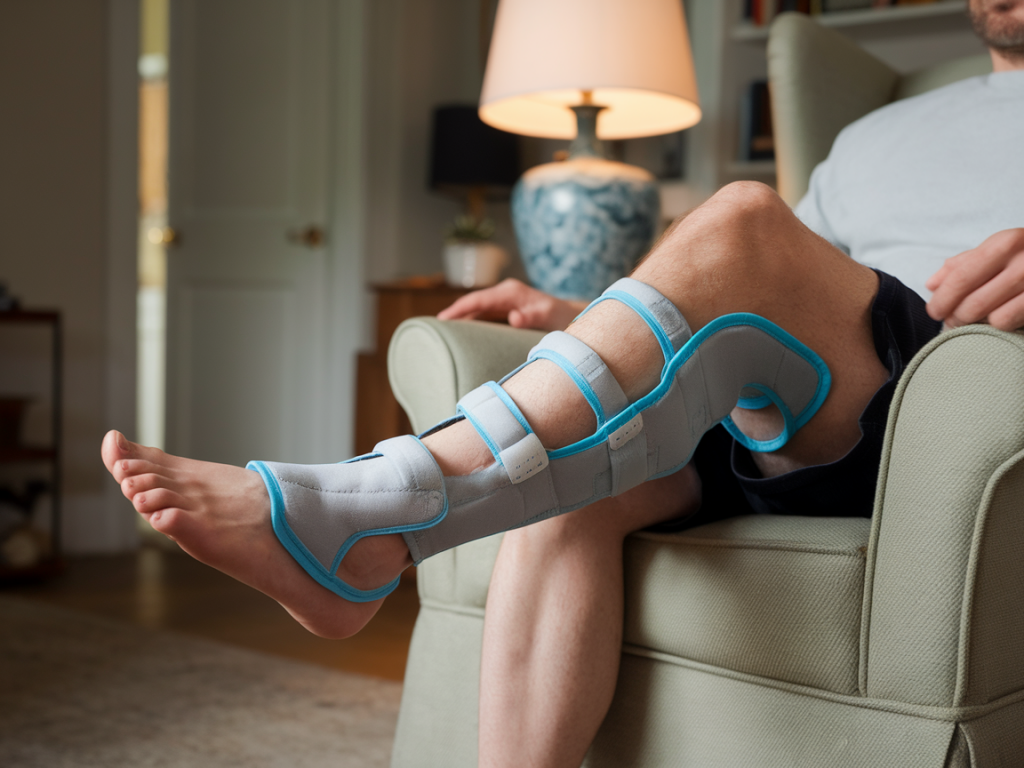
I’ve helped many people figure out practical ways to ease foot pain, and one strategy I keep returning to is the humble night splint. If you’ve been waking up with a stabbing heel pain from plantar fasciitis, a night splint can feel like a small miracle — but they’re not instantly comfortable or intuitive for everyone. I want to explain clearly how night splints work, who might benefit, and practical tips to actually tolerate wearing one through the night.
How night splints work — the simple mechanics
Plantar fasciitis pain is often worst first thing in the morning because the plantar fascia and calf muscles shorten while we rest. When you take that first step, the tissue is suddenly stretched, which can trigger sharp pain. Night splints keep the foot gently dorsiflexed (toes pulled toward the shin) during sleep, maintaining a mild stretch on the plantar fascia and Achilles tendon. Over time, that consistent low-level stretch helps reduce morning tightness and pain.
Think of a night splint as a low-intensity, passive stretching tool you wear while your body heals. It doesn’t “fix” the cause by itself, but it reduces the painful flare-ups that interrupt recovery and allows you to combine it with daytime exercises, footwear changes, and load management.
Types of night splints — dorsal vs. posterior
There are two common designs:
Each design has slightly different pros and cons. Dorsal splints can be more comfortable for side sleepers, while posterior splints can feel more stable if you move a lot at night. I’ll include a short comparison table so you can quickly weigh the options.
| Feature | Dorsal Splint | Posterior Splint |
|---|---|---|
| Bulk under covers | Low | Higher |
| Adjustability | Good (many use straps) | Very good (rigid frames common) |
| Best for | Light stretch, active sleepers | Stronger stretch, stable fit |
| Typical brands | Strassburg Sock, DonJoy Night Splint (dorsal variants) | Ossur Formfit, ProCare, Bauerfeind (posterior) |
Who should consider a night splint?
I often recommend night splints for people who:
Night splints are less useful if your pain is sudden, associated with trauma, or caused by nerve issues — in those cases it’s sensible to see a clinician first. If you have diabetes or poor circulation, check with a healthcare provider because splints can create pressure areas if not fitted properly.
Tips to tolerate a night splint — practical steps that helped my clients
Wearing a device overnight can feel strange at first. Here are the strategies I share so people stick with it long enough to get benefits:
Common questions I hear
Will a night splint cure my plantar fasciitis?
It’s rarely a standalone cure. Night splints are a symptom-control and recovery tool. Combine them with stretching, calf and intrinsic foot strengthening, footwear adjustments, and load management for best results.
How long until I see improvement?
Some people notice reduced morning pain within 1–2 weeks; for others, it can take 6–12 weeks. Stick with it while you’re doing other therapies — consistency matters.
Can I wear a splint every night?
Yes, many people benefit from nightly use for several weeks or months. After symptoms improve, you can taper to wearing it a few nights a week as a prevention strategy.
Will it make my muscles weaker?
Not usually. The splint provides a mild passive stretch, not immobilization. Continue daytime strengthening exercises to support recovery and avoid weakness.
Practical fit and care tips
If you’d like, I can recommend a short evening routine that pairs calf stretches and intrinsic foot exercises with gradual night splint wear — or walk you through choosing a specific splint based on your sleep habits. With a little patience and the right adjustments, many people find night splints are a manageable, effective way to reduce the worst morning pain and keep moving comfortably during the day.