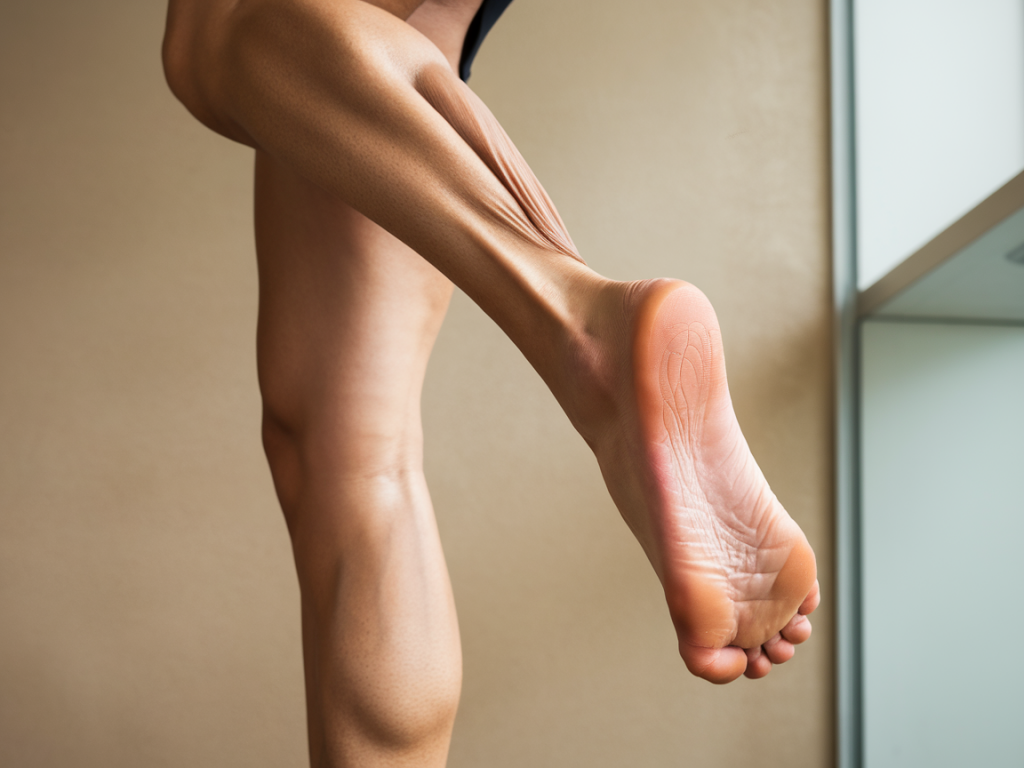
I get messages all the time from readers who wake up with stabbing heel pain and wonder whether it’s simply tight calves or something more serious, like a torn plantar fascia. I’ve been there: that first step out of bed feels disproportionally dramatic and you start mentally preparing for months of rest. The good news is that you can do a few quick self-assessments at home to get a clearer idea of what’s going on, and then choose sensible next steps that actually help instead of adding fear.
Where the pain is and when it hurts matters
Location and timing of pain tell you a lot. I always ask people to notice two things first:
- Exactly where on the heel or arch the pain is centered.
- When the pain is worst — first steps in the morning, during activity, or after long periods of standing.
Plantarfascial pain tends to be focused under the heel bone (medial plantar aspect) and is often worst with the first steps after rest or in the first 30 minutes of walking. Calf-related pain is often felt more in the back of the lower leg, above the heel, and may be associated with tightness or cramping that improves somewhat with movement.
Simple self-tests you can try right now
Perform these tests gently and stop if anything causes sharp, worsening pain. They’re designed to help you see patterns — not to provide a diagnosis.
- Palpation test: Sit and press with your thumb along the plantar fascia (from the heel forward along the arch). Tenderness concentrated at the medial heel where the fascia attaches suggests plantar fasciitis or a partial tear. More diffuse tightness or tenderness up the back of the calf indicates calf involvement.
- First-step test: Stand up after sitting or first thing in the morning and notice the first few steps. If pain is highest on those first steps and eases after walking a bit, plantar fascia irritation is likely.
- Active dorsiflexion test: While sitting, flex the ankle so the toes move toward the shin. If this stretching motion reproduces sharp pain under the heel, the plantar fascia is being tensioned — another sign pointing to plantar involvement.
- Single-leg heel raise: Try lifting onto one toe multiple times. If you can’t do this because of pain under the heel or if the motion triggers sharp pain, this suggests significant plantar fascia involvement or a more severe tear. If you complete the movement but feel tightness or fatigue in the calf, calf muscles are more implicated.
- Windlass simulation: Sit, place your foot flat, and manually extend (dorsiflex) the big toe while keeping the ankle stable. Pain under the heel with this maneuver is classic for plantar fascia stress because the Windlass mechanism tightens the fascia.
Quick comparison table: tight calves vs plantar fascia tear
| Feature | Tight calves (gastrocnemius/soleus) | Plantar fascia tear/osis |
|---|---|---|
| Pain location | Back of lower leg, upper Achilles area, sometimes heel | Medial heel underside, along the arch |
| When pain is worst | After prolonged standing/activity or during calf stretches | First steps in the morning, after rest, when toes are extended |
| Response to calf stretches | Immediate tightness reduction with regular stretching | May reduce tension slightly but often provocative for the first few reps |
| Single-leg heel raise | May be weak/tiring but not necessarily sharp pain | Often painful or impossible if fascia tear is significant |
| Palpation | Tenderness in calf belly or Achilles | Marked tenderness at heel attachment |
How to interpret what you find
If your testing shows mostly calf tightness and the heel pain is minimal or improves with gentle calf stretching, start there. Tight calves increase load through the foot and can lead to plantar fascia irritation over time — fixing calf mobility often prevents progression.
If pressing the medial heel is very painful, if the Windlass test reproduces pain, or if first-step pain is intense and persistent, then the plantar fascia itself is involved. A partial tear tends to be more painful than simple overuse and may cause weakness in heel raises. In those cases, don’t push through pain — modify activity and progress more conservatively.
Practical first-aid steps you can try at home
- Reduce aggravating activity: Cut back on high-impact exercise for a few days. Walk in supportive shoes (avoid flat flip-flops).
- Ice and compression: Ice the painful area for 10–15 minutes after activity. A simple tennis ball roll can both massage and cool the fascia.
- Short-term padding: Use a heel cup or cushioned insole (Superfeet or generic gel heel cups) to reduce pressure while you assess healing.
- Stretching routine: Do gentle calf stretches — both straight-knee (gastrocnemius) and bent-knee (soleus) — 2–3 times daily for 30–60 seconds per side. If plantar pain flares dramatically with toe extension stretches, ease off and focus on calf work first.
- Strengthening: Start with seated toe raises, progress to standing eccentric heel drops (slowly lowering the heel below the step height) once pain allows. Eccentric loading has good evidence for tendon and fascia adaptation.
- Night splint or stretches before bed: A night splint (available from brands like DonJoy) or a simple towel stretch can prevent the morning first-step pain by keeping the fascia gently tensioned overnight.
When to see a professional and possible investigations
See a physiotherapist or podiatrist if:
- Pain is severe, not improving after 2–4 weeks of conservative care, or getting worse.
- You can’t perform a single-leg heel raise or you notice weakness compared to the other side.
- There’s bruising, sudden severe pain after an acute injury, or trouble walking.
Clinicians may use ultrasound to look for a plantar fascia tear or MRI for more complex cases. For most mild–moderate cases, careful clinical assessment and a targeted rehab program are enough.
Practical routines I give readers — two 5-minute sequences
Here are two short routines you can do twice daily. I recommend starting with the mobility-focused routine if your pain is sharp, then adding strengthening as pain decreases.
- Mobility-first (5 mins):
- Foam roll calves gently, 1 minute each side.
- Gastrocnemius stretch (standing, straight knee) 2 x 30s each side.
- Soleus stretch (knee bent) 2 x 30s each side.
- Tennis ball roll under the arch, 1–2 minutes total.
- Strength-transition (5 mins):
- Seated toe curls with towel (10–15 reps).
- Single-leg heel raises (to tolerance) 2 x 8 reps, slow lowering.
- Short foot activation: 2 sets of 10 holds (pull ball of foot toward heel without curling toes).
Sensible footwear and product notes
Good shoes make a difference. I often recommend a supportive, cushioned shoe for the painful period — brands like Hoka and Brooks or structured sandals like Vionic can reduce stress under the heel. Orthotic insoles (Superfeet, or custom orthotics from a podiatrist) can be a useful short- to medium-term strategy.
If you choose an over-the-counter night splint or heel wedge, use it under guidance for comfort. I like recommending simple, evidence-informed products rather than gimmicks — a good pair of everyday shoes, a firm heel cup, and a resistance band (TheraBand) for stretches cover most people’s needs.
If you're unsure after trying these steps, a short consultation with a physio who looks at your gait and does the tests with you will save time and anxiety. And if you’ve tried conservative care for several weeks without consistent improvement, imaging and a specialist opinion can clarify whether there’s a partial tear that requires a different approach.