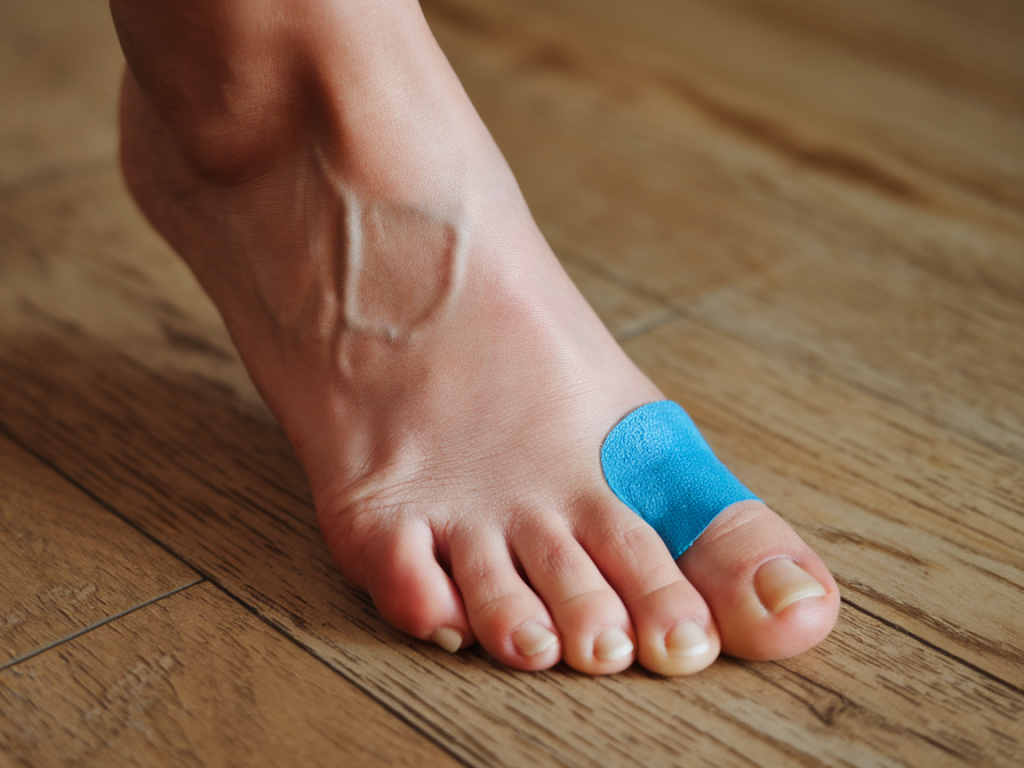
I often get asked whether toe-taping can actually relieve hammertoe pain. From my experience helping people with foot discomfort, and from testing gentle taping techniques myself, I can say: yes, toe-taping can help—sometimes quite noticeably—but it’s not a miracle cure. It’s a supportive, conservative strategy that can reduce pain, improve toe alignment temporarily, and make shoes more comfortable. It’s most useful when combined with sensible footwear choices, exercises, and, when needed, guidance from a professional.
What is hammertoe and why taping might help
Hammertoe is a deformity in which a toe (usually the second, third, or fourth) bends at the middle joint, forming a hammer-like shape. This change in position can cause pressure points, corns, calluses, and pain—not only from the bent joint itself but from rubbing inside shoes. Taping aims to:
gently realign the toe so the joint experiences less pressure,reduce friction against shoes,encourage better toe positioning during standing and walking, andprovide proprioceptive feedback so you’re more aware of toe position and movement.It’s important to understand that taping usually helps symptoms and functional alignment while it’s in place. If a hammertoe is rigid and fixed (doesn’t straighten with manual manipulation), taping will be less effective at changing the toe’s position long-term.
Materials I recommend
For taping hammertoes, I prefer using:
Hypoallergenic zinc-oxide or cloth sports tape (e.g., Leukotape, KT Tape style cotton tape) — it has good hold and is gentle on skin when removed carefully.Pre-wrap (optional) — a thin foam layer to protect delicate skin if you have sensitive feet.Scissors — to cut tape to size cleanly.Avoid using very sticky duct tape or anything that leaves a lot of residue. If you have diabetes, peripheral neuropathy, or circulation problems, check with a clinician before trying taping—skin damage or unnoticed pressure areas are risks.
Step-by-step: basic toe-to-toe taping for hammertoe relief
This is a simple method I use and teach. It’s best for flexible hammertoes that can be gently straightened.
Clean and dry the toes thoroughly. Remove any lotions that could reduce tape adhesion.If your skin is sensitive, apply a thin strip of pre-wrap around the toe as a protective barrier.Manually straighten the hammertoe gently so the toe is in a more neutral position. Don’t force it—aim for a comfortable alignment.Take a 4–5 cm (1.5–2 inch) strip of tape and wrap it around the affected toe and the adjacent toe. The tape should anchor on the adjacent toe and support the hammertoe in the straightened position. Think “buddy taping” but with the toes aligned, not just taped side-by-side tightly.Apply two strips: one around the toes near the base, and one closer to the middle, to stabilize without cutting off circulation.Check circulation: toes should stay warm and pink. If they become blotchy, numb, or cold, remove the tape immediately.Wear shoes that are wide in the toe box and low-heeled while taped to avoid added pressure.This approach reduces the hammering at the PIP (proximal interphalangeal) joint and can relieve dorsal corns or shoe rubbing. I like to keep the tape on for short periods—during activity or for a day—rather than continuous 24/7 use.
Variations and targeted taping
Depending on where the pain is, I sometimes use:
Figure-of-eight taping around the metatarsophalangeal (MTP) joint and PIP joint to control excessive bending.Strapping from the toe to the dorsum of the foot to offload the joint when a toe is very painful.Toe cap or moleskin over a corn plus taping around the toe to reduce friction rather than fully realigning the toe.These variations are helpful when corns or hot spots are the primary issue rather than the toe’s alignment alone.
Risks and precautions
Taping is generally low-risk, but I always caution readers about these points:
Skin irritation or allergic reaction to adhesive—stop if redness or blistering appears.Reduced circulation—never tape so tightly that the toe changes color or becomes numb.Masking serious problems—taping might hide worsening deformity or infection. If pain increases or there’s discharge, see a clinician.Not appropriate for rigid deformities—if the toe won’t straighten with gentle stretch, taping won’t correct the underlying rigidity and may be uncomfortable.Medical conditions—people with diabetes, neuropathy, lymphedema, or vascular disease should consult a podiatrist before attempting taping.When taping helps most—and when it won’t
Taping tends to work best for:
flexible hammertoes that still move freely,early-stage hammertoes with intermittent pain,temporary symptom relief during activity or shoe wear,reducing friction-related corns and calluses.Taping is less likely to help when:
the toe is rigid and fixed,there are severe structural changes in the forefoot (e.g., advanced bunions pushing toes out of alignment),pain is driven by arthritis in the joint or significant nerve involvement.Complementary strategies I use alongside taping
Taping is one tool in the toolbox. For more durable symptom control, I recommend combining it with:
Footwear changes — roomy toe boxes, low heels, and stiff soles can reduce pressure. Brands like Altra and New Balance offer styles with generous toe room.Toe spacers or silicone sleeves — these can cushion and gently realign toes in shoes when taping isn’t practical.Exercises — toe curls with a towel, marble pickups, and gentle toe extension stretches help maintain mobility and strength. I guide people to short, daily routines (5–10 minutes) rather than lengthy protocols.Orthotics — off-the-shelf or custom insoles can redistribute pressure across the forefoot and reduce the mechanical forces that promote hammertoe.Palliative care — callus debridement by a podiatrist, topical pads, and anti-inflammatory strategies when needed.When to see a professional
I advise seeing a podiatrist or orthopaedic consultant if you notice any of the following:
persistent or worsening pain despite conservative measures,a toe that’s fixed in a bent position and doesn’t improve with manual manipulation,skin breakdown, ulceration, or signs of infection,difficulty walking or changes in gait,underlying conditions like diabetes or neuropathy.A podiatrist can assess whether conservative care (taping, splints, exercises, footwear) is appropriate or whether more advanced treatments—such as injections, minimally invasive procedures, or surgery—should be discussed.
Practical tips from my practice
Here are a few everyday tips I share with readers and clients:
Try taping for short periods first to see how your skin and circulation respond.Use taping as a symptom-management tool—combine it with shoe changes and exercises for better results.Keep a small pack of medical tape and silicone toe sleeves in your bag for travel or long days on your feet.Document what helps: note which shoes, supports, or taping techniques reduce pain most so you can replicate them.Taping isn’t glamorous, but it’s practical—and when used thoughtfully, it can make a real difference in daily comfort. If you’d like, I can walk you through a short video-style sequence next, showing taping and a pair of strengthening drills you can do at home.