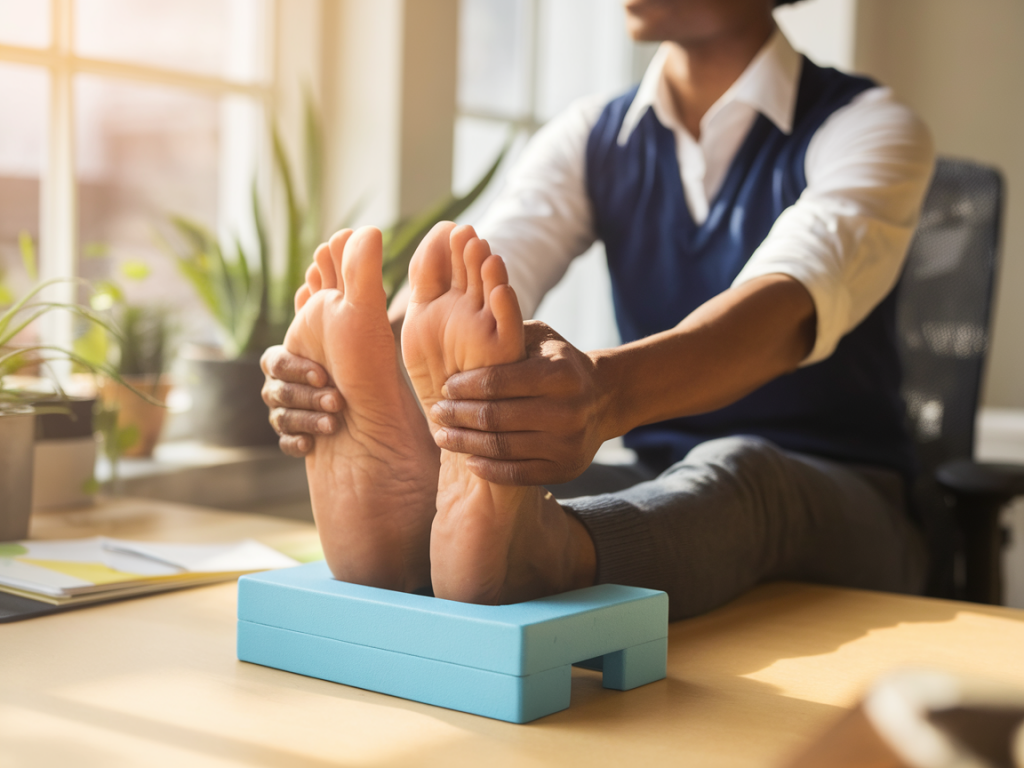
I’m sharing a simple, evidence-informed morning foot routine I use and recommend to desk workers who want to prevent stiffness, numbness, and the slow creep of foot discomfort that comes from long hours sitting. These gentle practices take 8–12 minutes and are easy to do before you get dressed or at your desk. They combine mobility, strengthening, and sensory re-education so your feet feel awake, resilient, and ready to support your day.
Why a morning foot routine matters for desk workers
Sitting for long periods reduces foot and ankle movement, decreases blood flow to the feet, and dulls sensation. Over days and weeks that can lead to stiffness, tingling, and a weakened intrinsic foot musculature. Morning movement helps:
- Increase circulation to flush out metabolic byproducts and reduce numbness.
- Reactivate the nervous system so your feet feel more aware and responsive.
- Improve mobility at the ankle, midfoot and toes to prevent compensatory patterns that cause pain.
- Strengthen small muscles in the feet to support arches and reduce overload in the calves, knees and hips.
What you need
No special equipment is required. You can use a towel, a small ball (tennis or lacrosse), and optionally a resistance band or short loop for added load. I sometimes use a thin yoga mat if I’m practicing on a hard floor. The whole routine works well barefoot or in thin socks — footwear can come after the routine when I choose supportive shoes for the day.
How to structure the routine (8–12 minutes)
I recommend doing this sequence slowly and mindfully. Breathe through movements, and focus on how each exercise changes the sensation in your feet. If anything is sharp or increases numbness, stop and reduce intensity.
- Toe wakes (1 minute)
While seated or standing, spread your toes wide, then curl them down and lift them up. Alternate between spreading, pressing toes into the floor, and lifting only the big toe while keeping the others down, then the reverse (lift toes 2–5 while keeping the big toe down). These drills re-educate independent toe control.
- Ankle circles and pumps (1–2 minutes)
Sit or stand and perform slow ankle circles in both directions for 30 seconds per ankle. Then do 20 ankle pumps (dorsiflexion and plantarflexion) with a purposeful pause at end ranges. Pumping mobilises the ankle joint and helps venous return.
- Seated calf off-sets (1 minute)
Sit with feet flat. Lift your heels while keeping toes grounded, then shift weight to toes and lift the heels slightly then release one heel at a time so you feel a gentle stretch through the soleus and Achilles. This targets different calf fibres and reduces stiffness after prolonged sitting.
- Toe scrunches with a towel (1–2 minutes)
Place a small towel under your toes while seated. Use your toes to scrunch the towel toward you for 30–60 seconds, then repeat with the other foot. This strengthens intrinsic foot muscles and helps the arch support itself.
- Ball roll for plantar fascia and arch (1–2 minutes)
Use a tennis or lacrosse ball and roll the sole of your foot slowly from heel to toes for 30–60 seconds per foot. Keep pressure gentle if you have inflammation; the aim is to increase sensory input and release localized tension, not to massage aggressively.
- Short foot activation (1 minute)
While seated, lift the arch of your foot by drawing the ball of the foot toward the heel without curling the toes—this is the “short foot” exercise. Hold 5–10 seconds and repeat 6–8 times per foot. This trains the intrinsic muscles to support the arch during standing and walking.
- Single-leg stand with micro-movements (1–2 minutes)
Stand near a sturdy surface for balance and lift one foot off the ground, maintaining a soft knee. Make tiny shifts forward, backward and side-to-side with the standing foot to challenge balance and proprioception. Hold for 30–45 seconds per leg. If balance is an issue, keep both feet and perform small weight transfers instead.
Quick variations for doing this at your desk
If you’re pressed for time, these two micro-routines take under 3 minutes and can be done in a chair:
- Seated circulation boost: 30 seconds of ankle pumps + 30 seconds of toe spreads and lifts.
- Desk-strengthener: 60 seconds of towel scrunches with both feet simultaneously while you sip your coffee.
Footwear and next steps after the routine
After waking up your feet, choose shoes that support your activity for the day. For primarily desk-based days, I prefer supportive flats or low-profile sneakers with a stable heel cup and enough room in the toe box—brands like Ecco, New Balance, or Allbirds often offer good options depending on your preferences. If you regularly feel numbness, avoid narrow toe boxes and high heels, which can compress nerves.
If you use orthotics, put them in after doing this routine so your foot muscles are primed. If you don’t use orthotics but have low arches or recurring pain, consider getting a gait and foot assessment from a podiatrist or physiotherapist who can advise on short-term supports versus strengthening strategies.
When to modify or seek professional help
These exercises are gentle, but not for every condition without adaptation. Seek professional advice if you have:
- New or worsening numbness that doesn’t improve with movement.
- Sharp, shooting pain, or signs of nerve involvement (e.g., burning or electric sensations).
- Recent foot or ankle injury, swelling, or inability to bear weight.
A clinician can provide targeted testing, nerve assessments, imaging if needed, and a tailored plan. For chronic numbness related to diabetes, vascular disease, or neuropathy, coordinate with your medical team for safe progression and monitoring.
Tips to make the routine stick
- Pair it with a morning habit: Do it while your kettle boils or during your morning stretch so it becomes automatic.
- Set a reminder: Use a phone reminder or a note on your desk for the first few weeks until it’s routine.
- Track improvements: Notice changes in sensation, comfort and ankle mobility—small wins reinforce consistency.
- Scale gradually: Increase repetitions or add a short walk after the routine as your foot endurance improves.
| Exercise | Duration | Purpose |
|---|---|---|
| Toe wakes | 1 min | Motor control and toe independence |
| Ankle circles/pumps | 1–2 min | Mobility and circulation |
| Towel scrunches | 1–2 min | Intrinsic muscle strengthening |
| Ball roll | 1–2 min | Sensory input and soft tissue release |
| Short foot | 1 min | Arch support activation |
| Single-leg stand | 1–2 min | Balance and proprioception |
My aim with this routine is practical and sustainable — small daily habits that build resilience. If you try it, let me know how your feet feel after a week; I love hearing what works and where people need tweaks so I can share better guidance for different needs and lifestyles.